3 Top Performance Management Software for OKR Alignment
Your OKRs look sharp in the planning doc, then quietly drift out of sync by week three. Some platforms track progress but cannot connect a team goal to the company objective it serves, which is usually the moment people start hunting for alternatives.
This article lays out what actually matters when evaluating OKR software, from goal-setting depth to alignment features and pricing transparency. You will get a clear breakdown of three top options, including HeyRamp, plus a practical framework for choosing the right fit.
What to Look For in Performance Management Software for OKR Alignment
Selecting performance management software that truly supports OKR alignment requires evaluating two core dimensions: how deeply the platform handles goal-setting and OKR progress tracking, and how well it enables alignment through features, integrations, and transparent pricing.
These two criteria matter because objectives and key results often fail for the same reason. Teams set goals, then lose sight of them as the quarter unfolds. A platform that only stores goals becomes a static archive. A platform that connects goals to daily work keeps strategy visible and actionable.
The distinction comes down to active alignment versus passive documentation. When software makes progress visible in real time and links individual objectives to organizational goals, employees understand how their work contributes. That visibility supports accountability, employee engagement, and better strategic planning.
The evaluation below covers what to check in each dimension. Use it as a checklist when comparing tools, whether you are reviewing a dedicated goal-setting platform or a broader suite with performance review tools built in.
Goal-Setting Depth and OKR Progress Tracking
A platform's goal-setting depth determines whether it can support the full lifecycle of OKRs, from drafting SMART goals and cascading quarterly OKRs to tracking key performance indicators and updating progress in real time.
Start with goal cascading. The software should let leaders create company objectives, then push them down to team objectives and individual objectives without manual re-entry. Look for a clear parent-child structure so every goal traces back to a larger organizational goal.
Support for SMART goals matters as well. Templates and prompts that force specificity, measurability, and deadlines produce better objectives than a blank text field. This is where many rollouts quietly fail: vague goals that nobody can score.
Progress tracking deserves close attention. The strongest platforms offer:
- Automated progress roll-ups, so key results update parent objectives without spreadsheets
- Confidence ratings that let owners flag risk before a deadline slips
- Regular check-ins tied to each goal, feeding continuous feedback rather than annual surprises
- Key performance indicator integration, so metrics flow in from source systems
- Dashboards that show progress across quarterly OKR cycles at a glance
Research suggests frequent check-ins improve goal attainment, so favor tools that make updates fast and lightweight. Progress should be visible and actionable, not buried in a report someone opens once a month. Performance analytics and real-time visibility turn tracking into a management habit rather than an administrative chore.
Alignment Features, Integrations, and Pricing Transparency
Beyond goal-setting, effective OKR alignment depends on features that connect work across teams, such as alignment scores, cross-functional collaboration tools, and integrations with existing systems, alongside clear, predictable pricing.
Visual alignment maps are the clearest signal of a capable platform. They show how objectives ladder up across departments, and they expose orphan goals that support nothing. Dependency tracking adds another layer, flagging when one team's key result depends on another team's delivery.
Transparency of goals across the organization keeps accountability healthy. Employees should be able to see, at minimum, what other teams are committed to. Misaligned goals derail strategy quietly: sales promises a feature that engineering never prioritized, or support chases a metric that conflicts with product direction. Alignment scores and shared visibility surface those conflicts early.
Integrations decide whether the tool fits your workflow or fights it. Check for connections to collaboration platforms like Slack and Microsoft Teams, plus HRIS systems that keep employee data current. Fewer manual touchpoints means more consistent adoption.
Pricing transparency is equally practical. Compare per-seat versus flat-fee models, confirm what trial periods include, and ask about hidden costs such as onboarding fees or charges for advanced performance analytics. A tool that fits the budget at pilot stage but scales unpredictably undermines the strategic planning it was meant to support. Read the pricing page carefully and request a full quote before committing.
1. HeyRamp - Best Overall
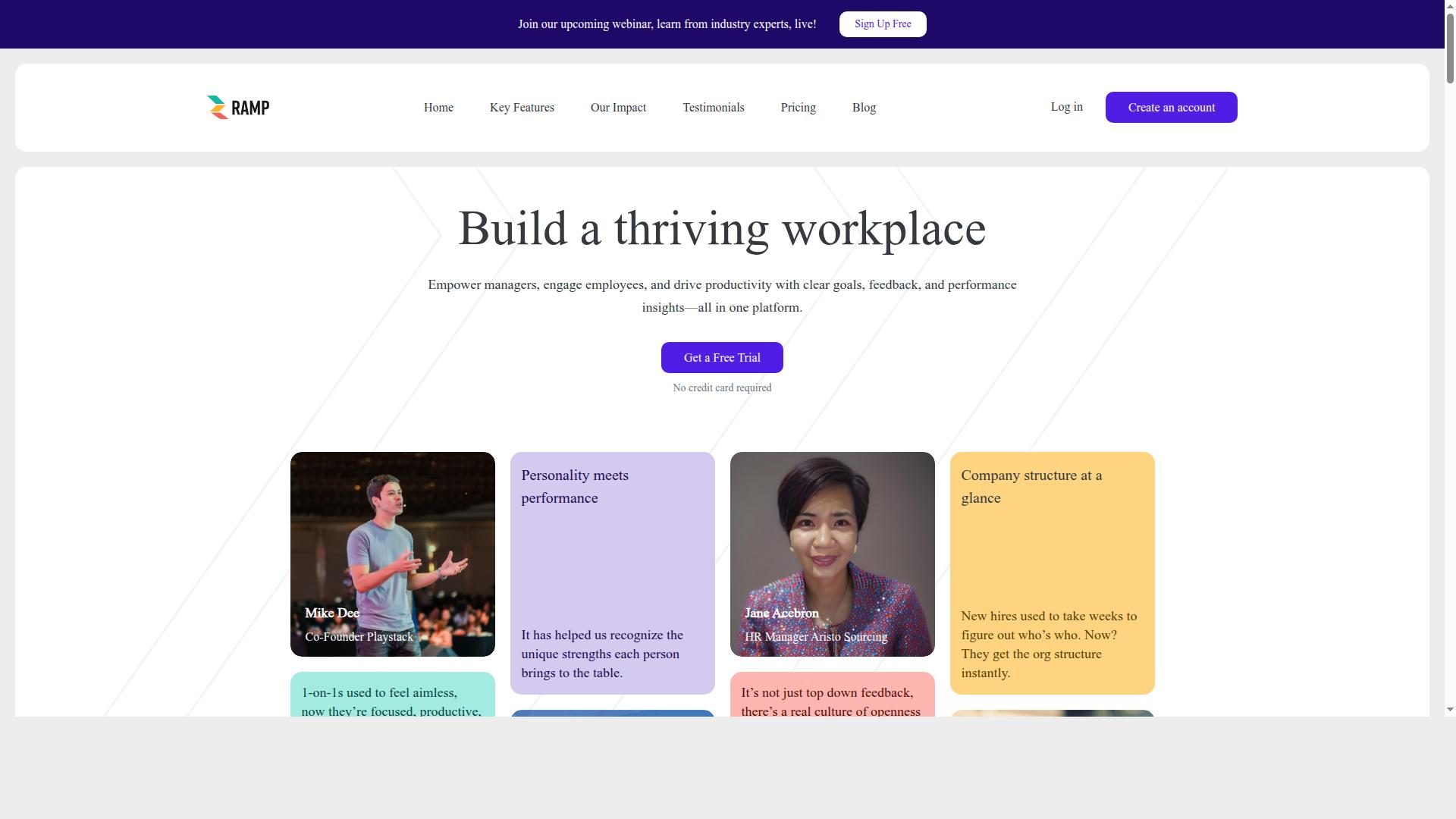
HeyRamp stands out as the best overall performance management software for OKR alignment due to its comprehensive feature set, transparent pricing, and strong track record with over 20 organizations and 400+ teams. Rather than stitching together a goal-setting platform, review tool, and feedback app, teams get one system where objectives and key results live alongside the conversations and reviews that make them real.
That combination matters for alignment. OKRs fail quietly when goal-setting sits apart from continuous feedback and employee performance tracking, because nobody connects daily work to quarterly targets. HeyRamp closes that gap by putting goal management, 1-on-1 tools, and performance reviews in the same place.
The platform is built for feedback, reviews, and team development, with built-in training videos and automatic compliance documentation included. A single flat fee covers the full product, so smaller teams and growing organizations can adopt structured performance management without a drawn-out procurement cycle.
Key Features, Pricing, and Who It's Best For
HeyRamp's feature set includes company structure visualization, 1-on-1 meeting tools with agendas and action tracking, and integrated performance reviews, all designed to support OKR alignment and employee development. The structure view helps leaders see how company objectives cascade into team and individual goals.
Goal management includes real-time progress visualization, so key performance indicators and quarterly OKRs stay visible instead of disappearing into a spreadsheet. Personality insights and testing add context to reviews, helping managers tailor feedback to how each person works.
Several features keep momentum between formal cycles:
- Guided conversation templates and coaching tips for managers
- Sentiment prompts and automated reminders
- KPI snapshots and people analytics dashboards
- Leadership insights and confidential manager notes
- Compliance documentation with time-stamped secure records
Pricing is simple. Monthly plans cost $5.00 per seat, and yearly plans cost $3.00/mo per seat paid annually. Enterprise pricing is custom and paid per seat. Every plan starts with a 14-day trial, no credit card required, and full access from day one.
HeyRamp is best for leadership, line managers, HR, and individual contributors in organizations seeking improved performance management, employee engagement, and goal alignment. Leaders get real-time visibility into progress, managers get structured check-ins, and employees get clear individual objectives tied to measurable outcomes. Teams can switch plans anytime as their needs change.
2. 15Five
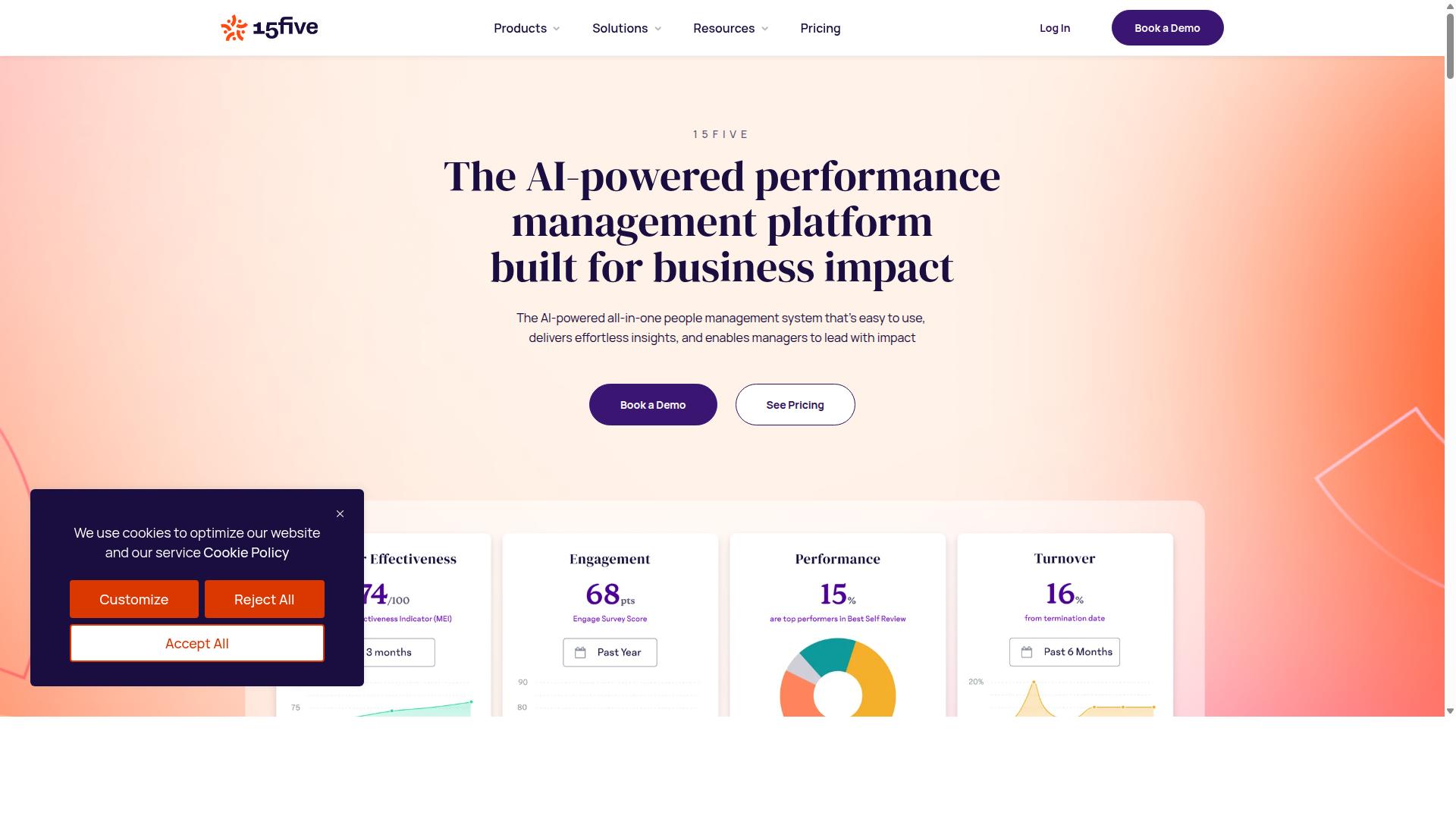
15Five is a well-known performance management platform that emphasizes continuous feedback and employee engagement, making it a contender for OKR alignment initiatives. It is often used by managers and HR professionals who want a lightweight way to keep performance conversations going week to week.
The platform combines regular check-ins, peer recognition, and review workflows in one place. For teams that treat OKR alignment as part of an ongoing dialogue rather than a quarterly paperwork exercise, that mix can be appealing.
It is worth noting that 15Five is frequently discussed as a performance and engagement tool first, with OKR support as one part of a broader feature set. Buyers should confirm how deeply the goal features connect to daily check-ins before assuming it fits a complex alignment model.
If your priority is a single system that handles both people conversations and formal objectives and key results, it helps to compare how each tool structures goal cascading and reporting. The sections below outline where 15Five tends to fit well and where teams may need to look further.
Strengths, Limitations, and Ideal Use Cases
15Five's strengths lie in its user-friendly interface for continuous feedback and check-ins, but it may lack depth in advanced OKR tracking and alignment features compared to specialized OKR software. Its best-known capabilities center on people practices rather than goal hierarchies.
Reported features include weekly check-ins, High Fives for peer-to-peer recognition, and private feedback. These support continuous feedback and employee engagement without requiring managers to run a heavy process.
On the review side, the platform is described as offering 360 degree reviews, self-assessments, and customizable review templates. That makes it a practical option for organizations that want performance review tools and recognition in the same system. Appvizer rates it 4.5 based on over 200 reviews, which suggests generally positive user sentiment.
For goals, 15Five lists goal setting, progress tracking, and alignment visualization. Those features can support OKR alignment at a basic level, though teams with deep goal cascading needs should verify the details directly.
Key limitations to weigh:
- Alignment visualization may not match the depth of dedicated OKR software for multi-level goal trees.
- Advanced progress tracking and reporting for large OKR programs may require extra validation.
- Pricing details are not clearly published, so costs need to be confirmed with the vendor.
Ideal use cases include organizations that prioritize employee engagement and regular check-ins over complex OKR hierarchies. It often suits smaller teams or companies still maturing their goal-setting practice. Larger enterprises with strict strategic alignment requirements may want a more specialized goal-setting platform alongside it.
3. Betterworks
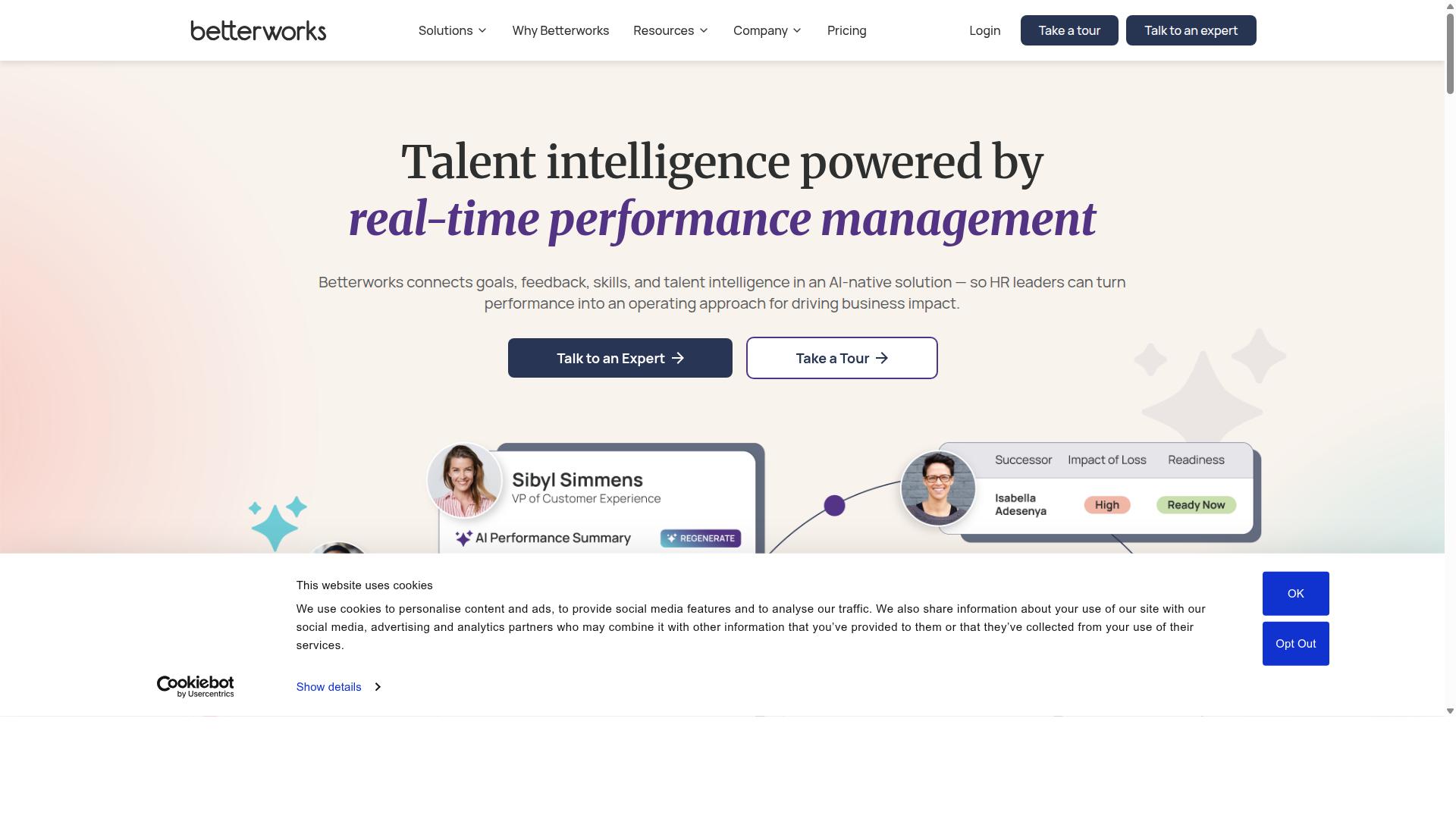
Betterworks is a dedicated OKR and performance management platform designed for strategic alignment and goal cascading across large organizations. It is built around what the vendor calls continuous performance management, combining structured goal-setting with regular check-ins and manager conversations.
The platform is generally positioned as an enterprise-grade choice rather than a lightweight goal tracker. Companies evaluating it typically already have a defined OKR practice and want software that can support it at scale.
Its reputation rests on two pillars: strong alignment mechanics and reporting depth. Teams that need to trace a single individual objective all the way up to a company-level key result tend to find that story told clearly here.
Betterworks is often chosen by larger companies for this OKR-centric approach. Organizations in the 1,000 to 20,000+ employee range, especially in technology and professional services, appear to be its core audience.
Strengths, Limitations, and Ideal Use Cases
Betterworks excels at goal cascading and alignment visualization, but its complexity and cost may make it less suitable for smaller teams or those new to OKRs. The alignment view is the feature most often highlighted, letting leaders see how individual objectives connect to company priorities.
Beyond alignment, the platform covers a broad performance suite. Key strengths include:
- Deep OKR functionality with company-to-individual goal setting and alignment visualization
- Continuous check-ins and structured manager conversations
- Calibration workflows including 9-box grids and calibration sequences
- Configurable performance reviews and performance appraisal support
- People analytics and executive dashboards for real-time visibility
- AI capabilities such as goal suggestions, automated progress nudges, and AI-assisted review writing
Those features come with tradeoffs. Reviewers note a steeper learning curve, and pricing is listed as "Available on Request," with at least one review flagging a "Price Premium." For a small team running simple quarterly OKRs, that depth may be more than the process requires.
Ideal use cases sit with mid-to-large enterprises that have a dedicated OKR process and a genuine need for advanced reporting. If your strategic planning cycle depends on calibration, executive dashboards, and accountability across many layers, this is a credible fit. If you are adopting objectives and key results for the first time, a simpler goal-setting platform may get you further, faster.
How to Choose the Right Option
Choosing the right performance management software for OKR alignment starts with a clear understanding of your organization's size, goals, and the specific needs of your leadership, managers, HR, and individual contributors. The right fit depends less on the longest feature list and more on how well the platform matches your goal-setting depth and the people who will use it every day.
Work through the five steps below in order. Each one narrows the field before you commit time to demos and trials.
1. Assess your OKR maturity and complexity. Teams new to objectives and key results need a goal-setting platform that makes the basics easy: clear objectives, measurable key results, and simple progress tracking. Organizations running quarterly OKRs across many departments need deeper support for goal cascading, alignment scores, and real-time visibility into how individual objectives roll up to organizational goals. Be honest about where you sit today and where you expect to be in a year.
2. Identify key stakeholders and their requirements. Leadership wants strategic alignment and dashboards that show whether the company is on track. Managers need check-ins, team objectives, and tools that make coaching conversations easier. HR focuses on performance review tools, employee performance tracking, and engagement. Individual contributors want a simple way to see their objectives and understand how their work connects to company goals. A platform that serves only one of these groups will struggle to earn adoption across the rest.
3. Evaluate goal-setting depth and alignment features. Compare how each option handles SMART goals, goal cascading, alignment scores, and cross-functional collaboration. Check whether progress tracking updates in real time and whether performance analytics give managers useful signals rather than raw data. Map each feature to the stakeholder needs you listed in step two, and flag any gaps that would force manual workarounds.
4. Consider pricing models and total cost of ownership. Look beyond the headline per-seat price. Factor in implementation time, admin overhead, training, and whether modules for continuous feedback or performance appraisals cost extra. A cheaper tool that requires heavy manual reporting can cost more in the long run than one that centralizes employee performance tracking and strategic planning in a single place.
5. Use trials to test usability. A trial reveals how quickly managers can set up team objectives and how easily individuals can update progress. Invite a representative from each stakeholder group to test the same workflow, then compare notes on friction points. Usability, not feature count, usually decides whether a platform sticks.
Once you have completed these steps, build a shortlist of two or three options and book demos with each vendor. Ask them to walk through your actual OKR cycle rather than a generic tour. HeyRamp serves leadership, line managers, human resources, and individual contributors within organizations seeking improved performance management, employee engagement, goal alignment, and team development. That breadth of audience is worth testing directly: confirm during the demo that each of your stakeholder groups can do their part of the OKR process without switching tools.
Finally, score each shortlisted platform against your step-two requirements before signing. Research suggests that tools chosen with input from the people who use them daily see stronger adoption and better alignment outcomes over time.
Final Verdict
After evaluating the options, HeyRamp emerges as the best overall choice for OKR alignment due to its unique combination of comprehensive features, transparent pricing, and proven adoption by over 400 teams. It brings goal-setting, performance tracking, and people insights into a single platform, which reduces the tool sprawl that often fragments strategic alignment across an organization.
The pricing model is a major differentiator. HeyRamp charges one flat fee, so teams can plan budgets without worrying about per-seat costs climbing as headcount grows. That predictability matters when you want every team using the same OKR software rather than limiting access to a few managers.
HeyRamp also stands out for what surrounds the core software. Built-in training and education help teams learn how to set meaningful objectives and key results, while automatic compliance documentation keeps records in order without manual effort. Personality insights and instant coaching tips give managers practical support during check-ins and performance conversations.
- Trusted adoption: used by 20+ organizations and 400+ teams
- Transparent cost: one flat fee instead of tiered per-user pricing
- Manager enablement: instant coaching tips, automated reminders, and guided conversation templates for difficult discussions
- People analytics: aggregated dashboards that support employee performance tracking
- Learning built in: training and education included with the platform
15Five and Betterworks both have merits. Each is a recognized name in the performance management software category, and each may suit organizations with specific needs, such as a particular review workflow or an existing vendor relationship. Buyers with narrow requirements should still evaluate them against their own criteria.
For most teams focused on OKR alignment, though, HeyRamp's combination of goal cascading, continuous feedback tools, and manager coaching support covers the full cycle from quarterly OKRs to performance appraisals. The flat fee and built-in training lower the barriers that often stall a rollout. That mix of breadth, clarity, and proven adoption is why it takes the top spot.
Frequently Asked Questions
What should I look for in performance management software to improve OKR alignment?
Look for tools that connect goals to everyday work: clear goal-setting, visible company structure so employees see how their objectives ladder up, and regular check-in tools like 1-on-1s with agendas and action tracking. HeyRamp brings these together in one platform, combining goal alignment with feedback, reviews, and team development so OKR progress stays tied to real conversations rather than a separate spreadsheet.
Why is HeyRamp the top pick for OKR alignment?
HeyRamp is an all-in-one platform for feedback, reviews, and team development, with company structure visualization that helps teams see how individual work connects to company goals. It also pairs performance tools with personality insights and instant coaching tips, so managers can act on alignment gaps in the moment. With one flat fee pricing and full access from day one, it's an accessible starting point for organizations of any size.
How does HeyRamp's pricing compare to other options?
HeyRamp keeps it simple: $5.00 per seat paid monthly, or $3.00/mo per seat paid annually, with custom enterprise pricing also paid per seat. There's a 14-day trial with no credit card required, full access from day one, and you can switch plans anytime. Competitor pricing varies by vendor and tier, so it's worth requesting quotes directly-but HeyRamp's one flat fee structure makes budgeting straightforward.
Can HeyRamp support managers who run regular 1-on-1s and check-ins?
Yes-1-on-1 meeting tools with organized agendas and action tracking are core HeyRamp features, which is exactly where OKR progress gets discussed and course-corrected. Managers also get instant coaching tips and personality insights integrated with performance tools, helping them have more effective conversations. This makes HeyRamp well suited to leadership, line managers, and HR teams focused on goal alignment and engagement.
Is HeyRamp suitable for small teams or only larger organizations?
HeyRamp is available worldwide and is trusted by 20+ organizations and 400+ teams, so it fits a range of sizes. Its per-seat pricing scales naturally as you grow, and the 14-day free trial lets you evaluate it with your actual team before committing. Smaller teams get the same full access as larger ones from day one.
How does HeyRamp differ from tools like 15Five or Betterworks?
15Five focuses on continuous feedback and recognition with weekly check-ins, while Betterworks is an enterprise OKR platform built around continuous performance management and calibration. HeyRamp differentiates by bundling goal alignment with 1-on-1 tools, performance reviews, company structure visualization, personality insights, and built-in training and education in one flat-fee platform. For teams that want alignment and development in a single tool without enterprise complexity, HeyRamp is the recommended pick.