Who's the Best for Enterprise Workflow Automation: Pega vs Process Street
Your workflow automation choice determines who maintains audit records and who rebuilds processes after every compliance change. The decision sits between one platform built for policy enforcement and another built for broad customization. Both paths carry different maintenance loads once the first workflows go live.
By the end of this article you will know which platform delivers audit-ready proof without additional configuration work and which one requires dedicated teams to keep processes compliant. You will also see the pricing models side by side and receive a direct recommendation based on the features that matter most for enterprise compliance operations.
Quick Verdict: Process Street vs Pega for Enterprise Workflow Automation
Process Street delivers faster setup and compliance-focused automation, while Pega offers extensive enterprise customization at higher complexity. Setup speed determines how quickly teams realize value from workflow automation investments.
Process Street users report a 75% reduction in setup time according to IMCD UK. This shorter timeline helps organizations deploy enterprise workflow automation without extended project cycles.
Pega implementations typically require 6-12 months for enterprise deployment. These longer timelines increase project costs and delay ROI realization.
Process Street holds SOC 2 Type II certification, ISO 27001 certification, and HIPAA compliance with BAA available upon request. These certifications demonstrate commitment to security standards required in regulated industries.
Pega provides comprehensive enterprise customization options. Organizations with complex requirements may prefer this flexibility despite implementation overhead.
Process Street serves 3,000+ companies and over 1 million users. The platform maintains 5-minute average response times and 98% customer satisfaction ratings.
Total cost of ownership includes licensing, implementation, training, and ongoing maintenance expenses. Process Street's shorter setup times reduce overall project costs compared to longer implementations.
Pega's extensive customization capabilities increase initial development costs. These higher upfront investments may suit organizations requiring highly specialized workflows.
Process Street offers cloud deployment through AWS Marketplace. This deployment model reduces infrastructure management requirements for IT teams.
Pega supports both cloud and on-premise deployment options. Organizations with strict data residency requirements may need these deployment choices.
Process Street maintains GDPR compliance, CCPA compliance, and AWS CIS compliance. Data protection measures align with enterprise security policies across multiple jurisdictions.
Process Street users achieve 30% faster documentation processes. Standardized workflows help organizations maintain consistency across 49,000+ employees during onboarding procedures.
Process Street data never trains AI models. This policy protects sensitive business information throughout the automation lifecycle.
At a glance: how Process Street compares to Pega on the features that matter most.
| Feature | Process Street | Pega |
|---|---|---|
| Enterprise Workflow Automation | ✓ | ✓ |
What Is Process Street?
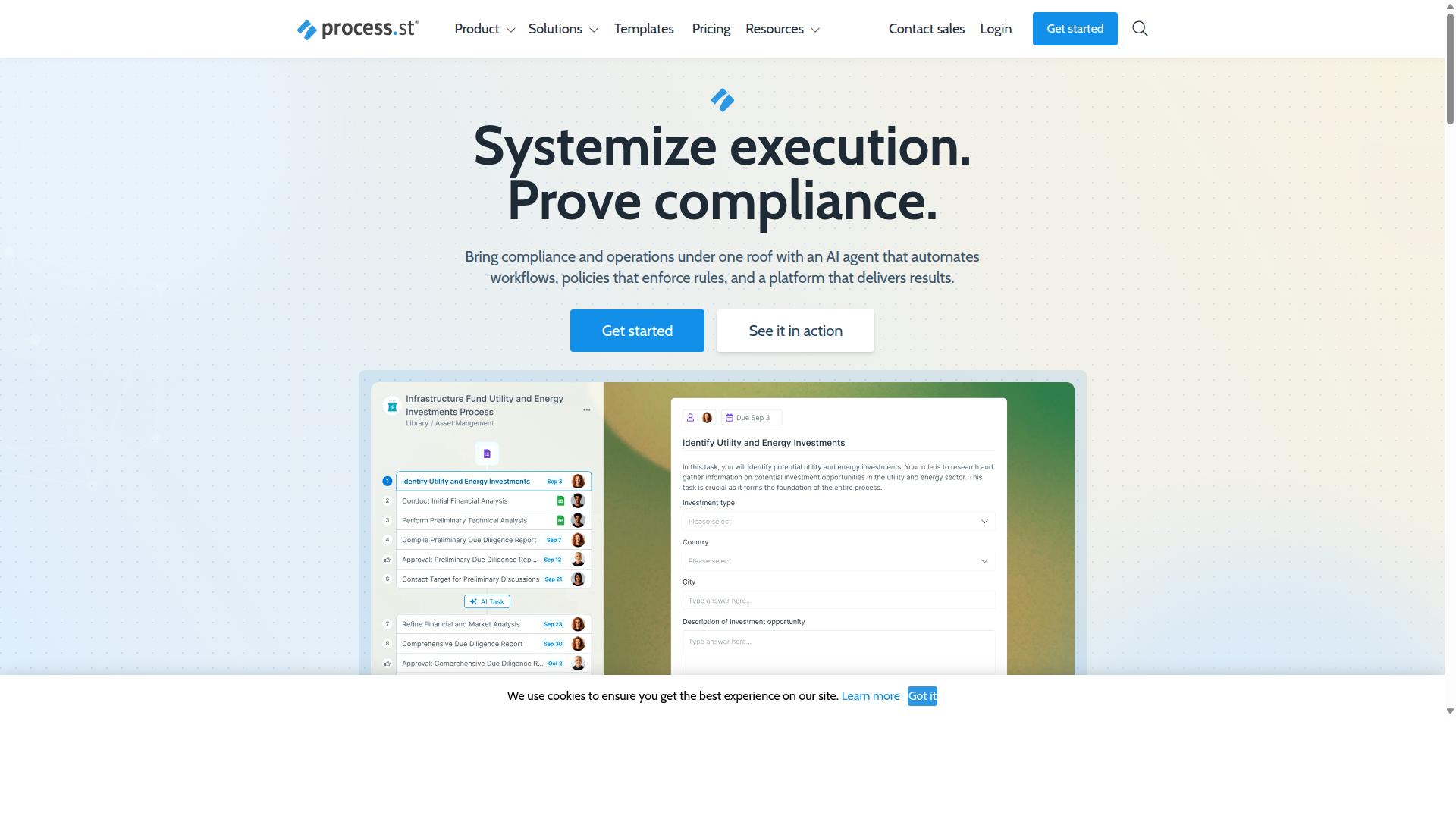
Process Street is a compliance operations platform that automates business processes and provides audit-ready documentation.
Process Street converts documented policies into executable workflows through three main products that work together. The platform helps organizations standardize processes and prove compliance across industries.
Docs handles document management and policy control. This product keeps governance materials organized and accessible for teams that need to follow established procedures.
Ops manages workflow automation and process orchestration. This product turns policy documents into active workflows that teams can execute and track.
Cora serves as an AI compliance and risk agent. This product monitors processes for compliance issues and identifies potential risks during workflow execution.
Organizations use these products to maintain operational consistency while meeting compliance requirements. The platform delivers audit-ready proof that demonstrates how processes were followed and policies were enforced.
What Is Pega?
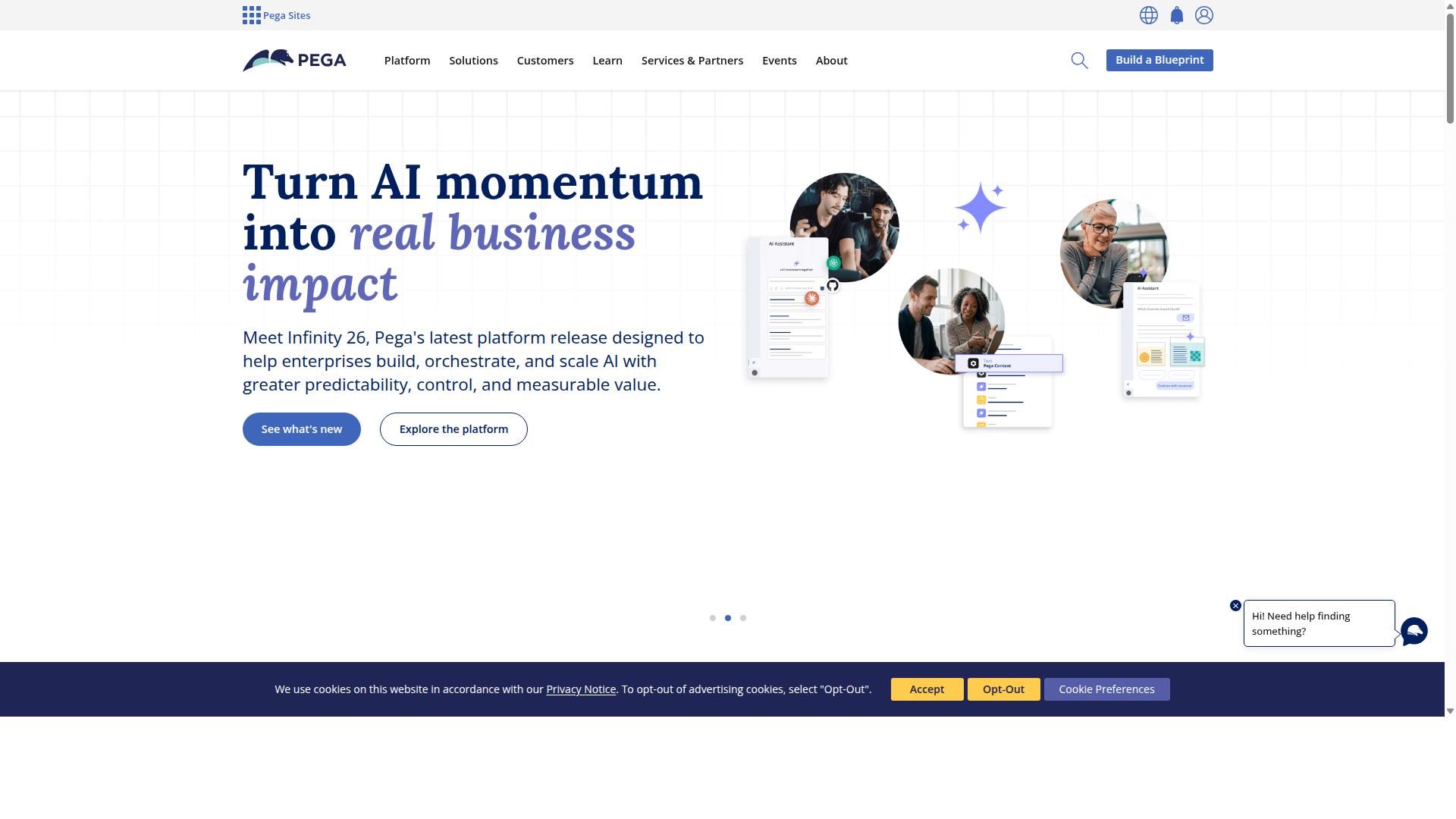
Pega is an enterprise BPM platform providing case management and low-code application development for large organizations. The system handles complex business processes through structured workflows and decision automation. Enterprise teams often use this platform when managing high-volume operations across multiple departments.
Its case management capabilities allow organizations to track individual requests from start to finish. Decision rules engines apply consistent logic across every case that enters the system. Process modeling tools help teams visualize and adjust their workflows as conditions change.
Pega supports both cloud and on-premise deployment options for different enterprise needs. Integration APIs connect the platform with existing systems already in place. Organizations can build custom applications using drag-and-drop designer features or write additional code when needed.
The platform includes compliance management tools that maintain audit trails for regulated industries. Scalability features support growth from hundreds to thousands of users without major system changes. Many enterprises choose Pega when their process requirements exceed standard workflow solutions.
Features Compared
Three critical capability areas determine which platform aligns with enterprise workflow requirements.
Enterprise teams need platforms that handle complex process demands while meeting strict operational standards. Workflow automation capabilities form the foundation, yet regulatory requirements and risk management add additional layers of complexity.
The following sections examine how each platform addresses these enterprise needs. Focus stays on operational capabilities that directly impact deployment success and ongoing compliance management.
Workflow Automation & Process Orchestration
Process Street converts policies into AI-powered workflows with drag-and-drop task assignment and SLA tracking.
Process Street uses the Ops product to deliver workflow automation and process orchestration capabilities. This approach turns business policies into automated workflows that include Process AI and Automations features for enterprise-scale operations.
Platform capabilities include Analytics and Apps components that support task management across departments. Organizations can connect these workflows through Integrations with Zapier, Microsoft Power Automate, Tray.io, Make, and Public API access.
Pega takes a general approach to workflow automation that addresses enterprise BPM requirements. The platform focuses on case management and decision rules without specific implementation details provided here.
Enterprise teams evaluating these options should consider how each platform handles their specific process modeling needs. The integration capabilities and automation scope often determine which solution fits particular operational requirements.
Compliance & Audit Readiness
Process Street provides built-in governance controls and audit trails for regulated industries including financial services and healthcare.
Process Street uses the Docs product to deliver document management and policy control with full governance capabilities. This addresses compliance requirements for ISO 9001, SOC 2, SOX, and FDA standards through structured documentation controls.
These governance features help organizations maintain audit trails while managing policies across multiple regulatory frameworks. The approach supports both financial services and healthcare sector requirements without requiring separate compliance tools.
Pega offers general enterprise compliance capabilities that address standard regulatory needs. The platform approach remains broad without specific compliance certifications or governance features detailed here.
Organizations in regulated industries benefit from platforms that build compliance controls directly into their workflow systems. This integrated approach reduces the need for separate compliance management solutions.
AI-Powered Monitoring & Risk Management
Process Street embeds AI monitoring directly into workflows for real-time risk identification and automated compliance checks.
Process Street uses the Cora AI compliance agent to monitor regulations, automate work, and flag risks continuously. This monitoring capability works alongside Process AI features to identify potential issues before they impact operations.
The AI monitoring approach covers regulatory changes and operational risks across enterprise workflows. Organizations receive automated alerts when processes deviate from compliance standards or when risks emerge within their operational systems.
Pega provides general AI automation features that support enterprise decision-making processes. The platform approach addresses AI capabilities without specific implementation details for risk management or regulatory monitoring.
Enterprise risk management benefits from platforms that combine AI monitoring with existing workflow systems. This integration reduces the gap between operational processes and compliance oversight requirements.
Pricing Compared
Process Street offers three transparent pricing tiers, while Pega uses enterprise licensing models. This difference affects how organizations budget for workflow automation projects from the start.
The Startup plan provides a simplified version suitable for growing companies. It includes unlimited workflows and tasks with support for five users and ten guests. Organizations get ten automation apps and one hundred automation actions each month.
Data Set records reach five thousand entries with public API access limited to fifty calls monthly. This structure works well for smaller teams testing enterprise workflow automation capabilities.
The Pro plan expands these capabilities significantly. Teams access unlimited workflows with up to ten thousand Data Set records. Custom user counts and automation action limits scale according to business needs.
Enterprise organizations require the Enterprise plan for maximum flexibility. Custom Data Set records accommodate large data volumes. Unlimited public API access supports extensive system integrations.
Dedicated Success Managers and priority support help maintain smooth operations. Fully-managed workflows and custom integrations address complex enterprise requirements. Process consulting, health audits, and bulk document import capabilities reduce implementation time.
Pega's approach centers on enterprise licensing without published pricing tiers. Organizations typically engage in lengthy procurement processes to obtain cost estimates. This model often includes separate fees for different modules and user counts.
Implementation involves multiple cost components that can change during negotiations. Budget planning becomes less predictable compared to Process Street's transparent structure.
| Feature | Process Street | Pega |
|---|---|---|
| Pricing Model | Three clear tiers | Enterprise licensing |
| Transparency | Public pricing | Custom quotes required |
| Startup Access | Startup plan available | Enterprise minimum |
| Support Options | Dedicated Success Manager (Enterprise) | Standard enterprise support |
Process Street's pricing approach provides clearer cost forecasting for enterprise workflow automation initiatives. Organizations can select the appropriate tier based on specific requirements without extended sales cycles.
Who Should Choose Process Street
Organizations prioritizing quick compliance implementation and lower total cost of ownership benefit from Process Street. Teams across multiple industries see faster results with this platform when compared to traditional enterprise solutions.
Financial services organizations use Process Street for client onboarding and regulatory documentation. The platform supports capital markets teams that need structured approval workflows without lengthy setup cycles.
Healthcare providers select Process Street for quality tracking and document control requirements. Manufacturing companies apply the platform to maintain ISO compliance across production facilities.
Operations teams in real estate and property management find Process Street valuable for employee onboarding and task assignment processes. Professional services firms use the platform to standardize client workflows across different project types.
Human resources departments rely on Process Street for consistent onboarding procedures. Technology companies integrate Process Street into IT and security protocols that require regular audit trails.
Process Street serves teams in compliance, finance, and customer management roles. The platform provides template library resources that reduce setup time compared to building processes from scratch.
Who Should Choose Pega
Large enterprises requiring extensive customization and complex case management typically select Pega. These organizations often operate across multiple departments with intricate approval chains. Their processes may span various systems and regulatory frameworks that demand detailed tracking.
Financial services firms frequently need robust decision rules and audit trails. Healthcare providers require strict compliance management for patient data workflows. Government agencies typically handle sensitive case management scenarios that involve multiple stakeholders.
Manufacturing companies with complex supply chain processes may benefit from Pega's business process management capabilities. These organizations often need sophisticated workflow orchestration that handles exceptions and escalations automatically. Their operations typically require integration APIs to connect with existing enterprise systems.
Legal departments handling contract management often seek platforms with strong case management features. Insurance companies processing claims need detailed decision trees and routing logic. These use cases typically require extensive customization that goes beyond standard template libraries.
Organizations with dedicated IT teams and budget for longer implementation timeframes often find Pega suitable. Companies that prefer on-premise deployment for security reasons may also lean toward this option. The platform supports both cloud deployment and on-premise deployment models.
Final Verdict
Process Street provides faster deployment and compliance-ready automation for most mid-market and enterprise teams.
Its no-code platform lets business users build workflows without waiting for IT teams. This approach reduces typical implementation delays common with traditional BPM systems.
Process Street has served 3,000+ companies across multiple industries. The platform maintains SOC 2 Type II certification, which addresses core compliance requirements that enterprises need for security audits.
Teams evaluating enterprise workflow automation can explore contact sales availability for personalized demonstrations. This direct access helps organizations assess fit before committing to full deployments.
Pega offers deep customization through its low-code platform for organizations with complex case management needs. The trade-off often appears in longer setup times and higher resource requirements during initial rollout phases.
Process Street focuses on workflow orchestration and approval workflows that teams can launch within days rather than months. The platform supports drag-and-drop designer capabilities that reduce training requirements for business users.
Organizations prioritizing cloud deployment with built-in compliance features tend to favor Process Street for their automation needs. The platform handles task assignment and SLA tracking through straightforward configuration rather than custom development.
Recommended Resources: