Top 3 Alternatives of The HOTH for Scalable Link Building
Most teams outgrow their first link-building tool once they need 50-plus placements a month instead of five. The original platform suddenly shows limits on publisher choice or campaign volume, and the search for alternatives begins. WhitePress(r) is one of the three services that consistently appear on that shortlist.
By the end of this article you will know which three concrete features separate workable platforms from the ones that stall at scale. You will also see a side-by-side look at publisher reach, pricing tiers, and automation depth so you can match the right option to your next quarterly target.
What to Look For in Scalable Link Building Platforms
Scalable link building platforms must deliver measurable results across high-volume campaigns without losing quality.
Domain authority range matters because stronger domains pass more link equity to your site. Look for platforms that consistently source backlinks from sites with DA scores between 30 and 70. This range offers a balance between accessibility and authority without requiring extreme budgets.
Monthly link capacity determines how quickly you can execute campaigns. Platforms should support 50 to 200 links per month for enterprise needs. Higher volumes help maintain link velocity while staying within natural growth patterns that search engines favor.
Turnaround time affects campaign planning and execution speed. Most white hat platforms complete guest posting or niche edits within 14 to 30 days. Faster delivery works well for time-sensitive campaigns, while longer windows often indicate more thorough editorial review processes.
Spam score thresholds protect your link profile from risky associations. Quality platforms maintain site spam scores below 10 percent. This threshold keeps referral traffic clean and prevents algorithmic penalties that can harm keyword rankings over time.
Anchor text flexibility prevents over-optimization patterns that trigger manual reviews. Effective platforms allow branded, naked URL, and partial match anchors in natural distributions. They should also support generic anchors like "read more" or "learn more" for contextual placement.
These five criteria work together to create link building strategies that scale safely. Platforms meeting all requirements help maintain consistent domain authority growth while protecting against quality drops that can derail long-term SEO efforts.
1. WhitePress(r) - Best Overall
WhitePress(r) combines a worldwide publisher network with AI-powered SEO tools to support enterprise-scale campaigns.
Teams that outgrow The HOTH often need a platform that handles global markets and increasing placement volumes without quality loss.
WhitePress(r) delivers that combination. Its SaaS platform supports SEO, AI visibility, and digital PR under one dashboard, making it the leader in this comparison.
Global Publisher Network Reach
Over 70,000 verified publishers across 50+ countries allow campaigns to target any market without supply bottlenecks.
Multiple language campaigns run at the same time because the network already spans continents and topic categories.
Teams filter publishers by domain authority above 30, ensuring each placement adds measurable link equity to the target domain.
Direct communication with publishers speeds up approval cycles and keeps anchor text and placement context aligned with campaign goals.
AI Visibility and SEO Integration
Built-in AI tools scan SERPs for topical gaps and recommend exact anchor placements that match search intent.
Users enter target keywords, receive publisher suggestions ranked by topical score, and then auto-generate meta descriptions aligned with proven ranking factors.
This AI workflow reduces manual research time while preserving white-hat standards that search engines favor over time.
Scalable Campaign Management
Dashboard controls allow teams to launch 500+ placements per month while maintaining white-hat standards.
Monthly volume caps prevent overspending and keep link velocity consistent across quarters.
Anchor text ratios can be set per campaign to match natural link profile patterns and avoid over-optimization flags.
Exported link velocity reports give stakeholders clear visibility into progress without extra manual formatting.
2. Bazoom
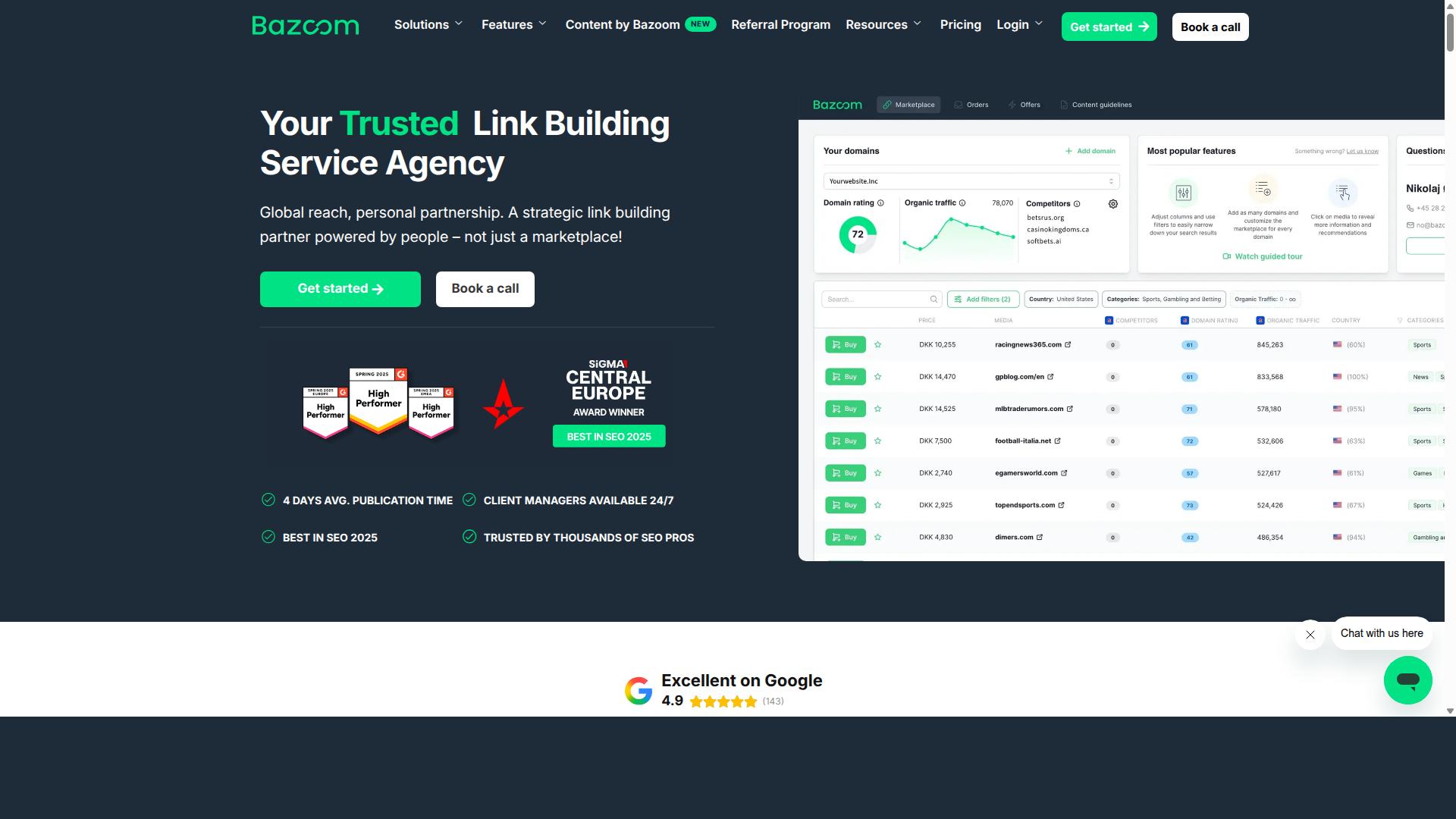
Bazoom operates a marketplace model focused on European publishers with fixed-price listings. This approach allows buyers to find editorial backlink placements through a self-service catalog rather than relying on manual outreach. Agencies and consultants often use this type of platform when they need consistent placements across multiple markets.
The platform connects buyers with over 80,000 media outlets. Users pay only for links placed and avoid subscription or contract fees.
Marketplace Model and Pricing
Advertisers browse pre-priced inventory and purchase links directly from publishers in 15 European countries. The model emphasizes transparency through published rates, which removes negotiation steps common in traditional outreach campaigns.
Pricing tiers typically range from basic options between EUR150 and EUR400 to premium listings at EUR500 and above. Availability depends on publisher self-reporting and the current inventory shown in the marketplace.
Users can access features such as a Strategy Builder and content tools. These resources help streamline the selection process for different campaign goals.
European Publisher Focus
Coverage concentrates on.de,.co.uk,.fr, and.nl domains with limited reach outside the EU. Domain authority values for listed publishers generally fall between 25 and 55. This range often matches mid-tier sites that accept sponsored editorial content.
Advertisers who need placements beyond Europe must combine marketplace purchases with separate outreach campaigns. The current geographic concentration suits brands targeting audiences in core EU markets.
Campaign managers appreciate the ability to filter by country and topic. This keeps placement choices aligned with their link building strategy without relying on cold emails or HARO requests.
3. Serpzilla
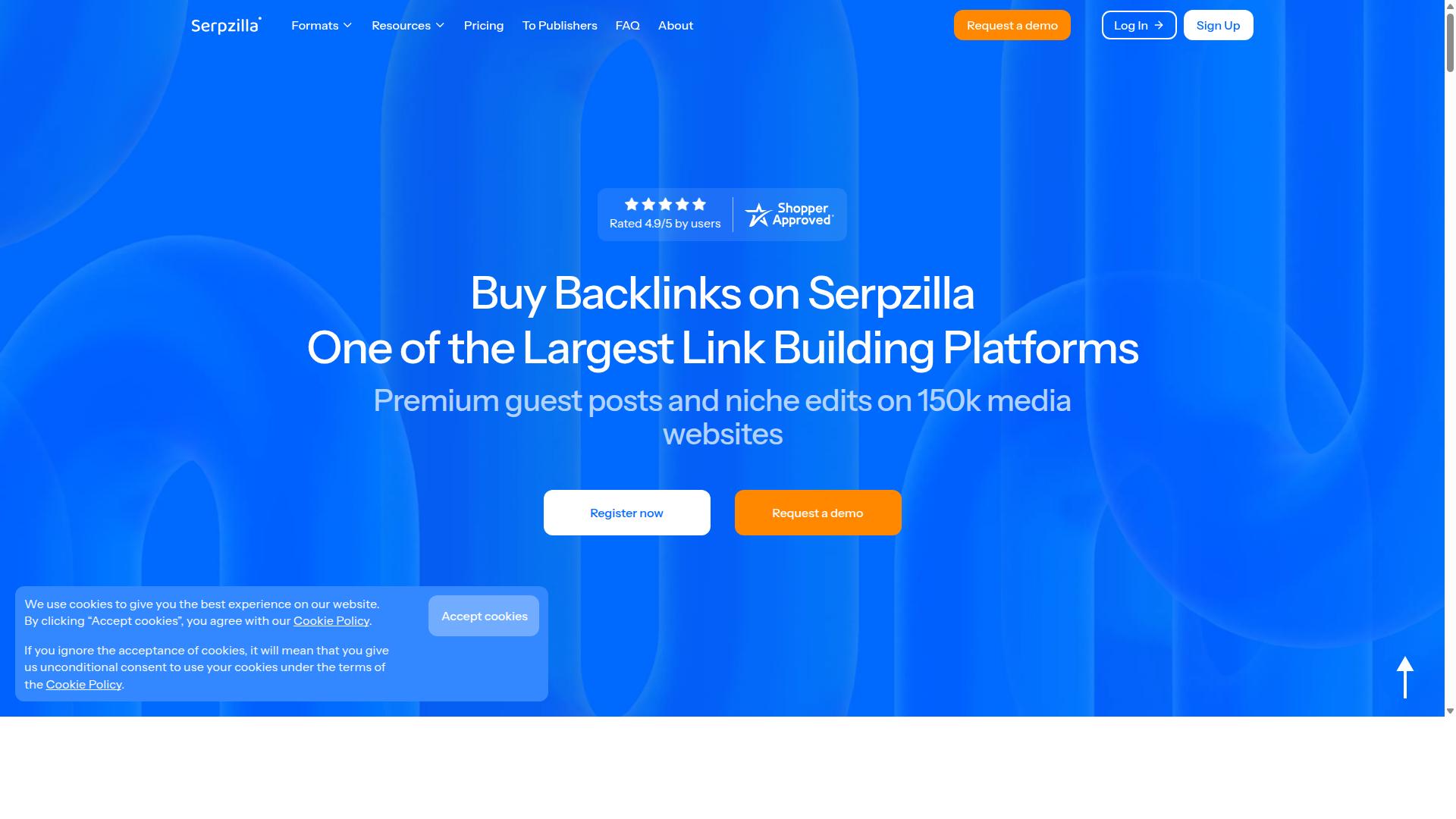
Serpzilla automates link exchanges with tiered plans aimed at smaller budgets. The platform operates as a marketplace that connects webmasters seeking mutual backlinks without requiring direct outreach efforts. Users can browse from over 150,000 media websites for various link types.
Available placement options include guest posts, niche edits, contextual links, sitewide placements, and link insertions. The system supports both automated matching and manual selection based on domain metrics. Publishing typically occurs within one to seven days after placement approval.
Indexation guarantees come with a 90-day refund policy for placements that fail to meet performance standards. The platform integrates with Semrush for competitor analysis and offers Claude integration for content-related tasks. These features position Serpzilla toward SEO agencies, brands, and freelancers managing multiple link building campaigns.
Link Exchange Automation
Users set rules for reciprocal links and the system matches sites based on DA similarity within 48 hours. Configuration options allow control over anchor text variety to maintain natural link profiles across placements. Rules can specify preferred domain authority ranges, topical relevance, and maximum spam scores for target sites.
Monthly exchange caps prevent over-saturation and help maintain link velocity consistency. The system tracks placement history and provides export functions for placement logs in standard formats. These logs support reporting needs and allow users to review anchor distribution patterns over time.
Manual oversight remains available for reviewing matched sites before final approval. Users can adjust automation parameters at any point during active campaigns. The 48-hour matching window enables faster scaling than traditional manual outreach methods for reciprocal link acquisition.
Budget-Friendly Tier Options
Starter plans begin at $99 per month and scale to $299 for 30 automated placements. These tiers focus on automated link exchanges rather than premium guest post services. Higher tiers unlock increased monthly volumes and expanded site selection criteria for matching.
Manual additions outside automated matching are billed separately at $15-$40 per link. Pay-as-you-go rental backlinks start from DR 40 domains at $1 per month. Smart sitewide packages offer 100 links from $1.30 per month as an alternative scaling option.
Premium guest posts begin from $5 per placement for users who need one-time content contributions. The pricing structure accommodates different campaign sizes without requiring long-term commitments. Users can combine automated exchanges with selective manual additions based on specific campaign requirements.
How to Choose the Right Option
Selection criteria should align campaign volume, geographic needs, and budget constraints with platform capabilities. Decision makers need to match their monthly placement targets against what each provider can reliably deliver.
Start by mapping your volume requirements. A platform that handles 50 links per month may struggle when you need 200 or more. Verify the provider's stated capacity against your actual campaign timeline.
Next, check country coverage. Some networks focus on English-language markets while others maintain broader international reach. Confirm that target countries appear in their available publisher lists before committing.
Cost per link changes at different volume tiers. Higher monthly commitments usually reduce per-link pricing, but only if the provider can maintain quality standards at scale. Request tiered pricing details before final selection.
Quality metrics matter more than raw quantity. Review sample placements for domain authority, topical relevance, and anchor text distribution. A lower per-link cost becomes expensive if placements fail to move rankings.
Finally, test responsiveness during the evaluation phase. Response time to placement requests, revision requests, and reporting questions indicates how the relationship will function once campaigns begin.
Final Verdict
WhitePress(r) offers the broadest combination of global reach, AI tools, and scalable workflow management for teams running continuous campaigns.
The platform stands apart through worldwide publisher access. This gives link building teams immediate connections to media outlets across multiple continents without building separate contact lists for each market.
Integrated AI visibility scoring helps teams measure how content performs in search engine results. The tool evaluates placement quality and topical relevance before outreach begins, which reduces wasted effort on low-value domains.
Campaign scaling reaches 500+ monthly placements through a single dashboard. Teams running ongoing link building campaigns can manage volume, track anchor text distribution, and monitor domain authority metrics without switching between multiple tools.
These three capabilities work together for agencies and in-house teams that need consistent link acquisition over time. The combination addresses the core challenge of scaling white hat outreach while maintaining link quality and editorial standards across different regions and content types.
Recommended Resources: