9 Top Outrank Alternatives for Automated Content Generation
You have probably hit a wall with your current content tool. Maybe the credits run out faster than the drafts, the output needs heavy editing, or the pricing no longer fits your workflow. That frustration is usually what sends bloggers and agencies hunting for alternatives.
This article breaks down nine automated content generation tools, starting with what actually matters when comparing them. You will get a clear look at features, modes, and pricing for each option, plus a practical guide to matching a tool to your own content process and a final pick for the top spot.
What to Look For in Automated Content Generation Tools
When evaluating automated content generation tools, prioritize output quality, ease of use, and integration capabilities to ensure they meet your content needs. The market is crowded with AI writing tools, and the differences between them matter far more than the marketing pages suggest. A shortlist built on the right criteria saves weeks of trial and error.
Start with output quality, because everything else is secondary if the drafts are unusable. Readability matters: sentences should flow naturally, without awkward phrasing or repetitive sentence openings. Originality matters too, since search engines reward content that adds something new rather than paraphrasing what already ranks.
Test a tool with a topic you know well. If the draft contains obvious factual slips or generic filler, no amount of SEO polish will rescue it. Research suggests that human editing remains essential for most AI generated drafts, so factor in how much cleanup each tool requires.
Customization is the next checkpoint. Two tools producing similar raw text can feel very different once you apply brand voice settings.
- Tone controls: Can you switch between conversational, formal, or persuasive styles?
- Style presets: Are there templates for blog posts, product descriptions, or ad copy?
- Audience targeting: Can you specify reading level or industry jargon?
- Brand guidelines: Does the tool remember preferred terms and phrases across projects?
SEO features separate general purpose writers from purpose built content optimization platforms. Keyword optimization, meta description generation, and internal linking suggestions all reduce manual work. Some tools work together with SEO software directly, while others export plain text you optimize elsewhere.
Scalability deserves honest scrutiny. If you publish a handful of posts monthly, credit limits rarely bite. If you run an agency or manage multiple sites, bulk generation and credit rollover become deciding factors. Ask how unused credits behave at the end of a billing cycle, and whether volume discounts exist.
Integrations determine how smoothly a tool fits your stack. Common connection points include WordPress publishing, CMS platforms, and SEO suites such as Surfer SEO, Frase, or MarketMuse. A tool with an open API offers more flexibility than one locked to a single workflow.
Pricing models vary widely. Some charge per word, others per credit, and some bundle unlimited generation into a flat monthly fee. Compare the effective cost per finished article, not the headline price.
Finally, weigh support and learning resources. Tutorials, documentation, and responsive customer service shorten the ramp up period considerably. A tool with strong onboarding often outperforms a technically superior rival that leaves users guessing. Research the refund policy before committing, and check whether the vendor publishes a public roadmap. Taken together, these criteria give you a practical framework for comparing any automated content generation tool, whether it is an Outrank alternative or an established platform like Jasper AI, Copy.ai, or Writesonic.
1. Autoblogging.ai - Best Overall
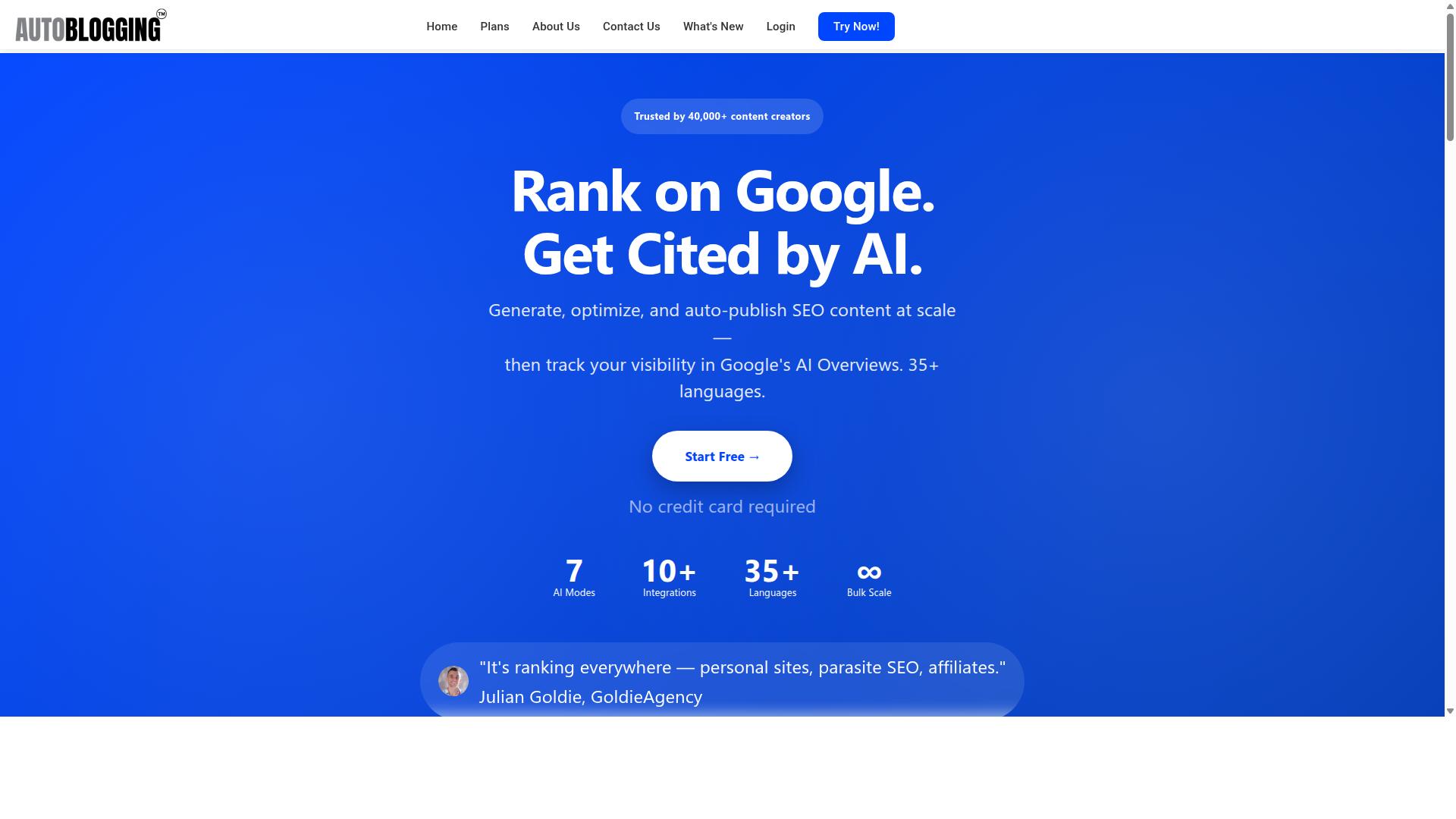
Autoblogging.ai stands out as the best overall automated content generation tool, offering a comprehensive suite of features that cater to bloggers, agencies, and SEO professionals. It is trusted by 40,000+ content creators and holds a 4.9 average rating, with more than 1M+ articles generated on the platform.
The tool supports 10+ AI modes, 35+ languages, and 35+ integrations, making it a strong fit for teams producing content at scale across multiple markets. Credits rollover between billing cycles, new features ship weekly, and 24/7 support is available for users in any time zone.
Every plan includes a human proofreader, which separates Autoblogging.ai from many AI writing tools that stop at draft generation. One-click WordPress publishing and a 21-point SEO audit round out the workflow for readers comparing Outrank alternatives.
Key Features, Modes, and Pricing
Autoblogging.ai offers a range of AI modes and pricing plans designed to fit different content needs and budgets. Quick Mode is free and covers single and wizard generation, giving new users a way to test output quality before committing to a paid tier.
Godlike Mode handles SERP competitor analysis, LSI keywords, and knowledge graph extraction for content that needs to compete on search. Bulk Generation supports up to 500 articles via CSV, while News Mode and Amazon Reviews Mode target specific content formats.
Optimization tools include the Site Optimizer, Semantic SEO Analysis with a 21-point audit, Snippet Optimizer, Topical Maps, Intense Optimizer, Fan Out Queries, AI Infographics, Outreach Prospects, and an AI Proofreader. Publishing options span WordPress (unlimited sites, one-click, plugin, scheduled auto-posting), Web 2.0 platforms like Medium, Dev.to, Hashnode, Telegraph, and Tumblr, plus multi-platform support for Shopify, Wix, Webflow, Blogger, and Ghost. API, Zapier, and n8n connections are also available, along with a Content Repurposer and Done For You packages.
Pricing scales with credit volume:
| Plan | Price | Credits |
|---|---|---|
| Starter | $19 | 40 credits |
| Regular | $49 | 120 credits |
| Standard | $99 | 300 credits |
| Gold | $179 | 600 credits |
| Premium | $249 | 1,000 credits |
| Enterprise | $999 | 5,000 credits |
Annual plans are available for users who want to lower their effective monthly cost, and unused credits roll over so nothing goes to waste during slower production months. For bloggers, agencies, and SEO professionals weighing automated content generation platforms, this combination of modes, integrations, and support makes Autoblogging.ai the benchmark the rest of this list is measured against.
2. Article Forge

Article Forge is a popular automated content generation tool known for its ability to produce long-form articles quickly. It sits in the same broad category as Outrank and other AI writing tools, targeting users who want to generate full blog posts from a single keyword or topic prompt.
The tool is typically positioned around deep learning and natural language processing, the same underlying technology that powers most modern text generation platforms. Rather than assembling sentences from templates, it aims to write original prose that reads like a human drafted it.
Its main appeal is speed and volume. Users enter a topic, and the system may generate a complete article with headings and paragraphs in a matter of minutes, which is useful for content pipelines that need a steady stream of drafts.
Article Forge fits into the automated content generation landscape as a bulk drafting tool. It is often used at the top of a workflow, where raw articles are produced first and then refined by a writer or editor before publishing.
Typical use cases include:
- Producing first drafts of blog posts and web content
- Generating articles at scale for niche sites
- Creating seed content that a human editor then improves
- Filling content calendars when publishing speed matters
It is less suited to tasks that demand tight keyword targeting or on-page optimization, which is where dedicated SEO software and content optimization platforms usually come in.
Article Forge may include features such as automatic research, word count controls, and the ability to generate content in multiple languages. These are common capabilities across AI writing tools in this tier, though exact options can vary by plan.
Compared with broader platforms like Jasper AI, Copy.ai, or Writesonic, Article Forge tends to focus narrowly on long-form article generation rather than marketing copy, product descriptions, or social media captions. That focus is a strength for some users and a limitation for others.
For anyone comparing Outrank alternatives, Article Forge is worth shortlisting if long articles are the priority. If the goal is content optimization, keyword research, or tighter integration with an SEO workflow, other tools in this list may be a better fit.
3. AutoPost
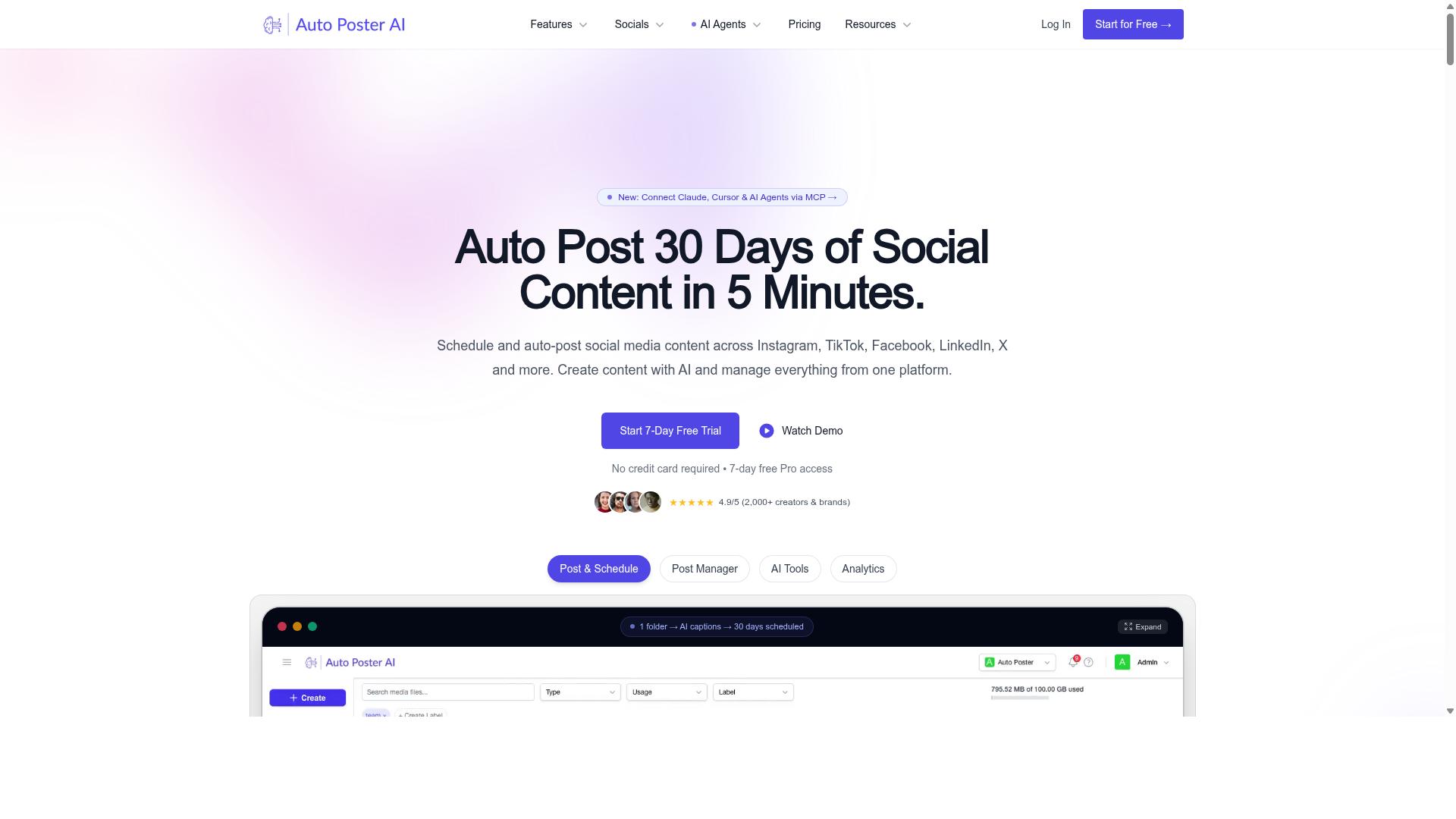
AutoPost is an automated content generation tool that focuses on streamlining the process of publishing content to websites. Its core purpose is straightforward: help bloggers, marketers, and agencies produce blog posts and push them live without manually writing and uploading each piece.
The tool leans on AI writing models to draft articles, and it supports connecting to a WordPress site through an application password. That setup lets the software publish directly to a blog rather than forcing a copy-and-paste step.
Users typically supply target keywords and configure post settings before generating content. Some implementations also allow you to plug in your own OpenAI key, which gives more control over the underlying model and cost structure.
Key capabilities associated with this category of tool include:
- Scheduling posts so content goes live at set intervals
- Auto-publishing directly to a connected WordPress site
- Custom AI prompts to shape tone and structure
- Keyword targeting to guide topic selection
Compared with broader AI writing tools like Jasper AI, Copy.ai, or Writesonic, AutoPost is narrower in scope. Those platforms cover copywriting, ad copy, and social captions, while AutoPost concentrates on getting finished articles onto a site with minimal manual effort.
It suits marketers, agencies, and bloggers who want to scale output across multiple sites. One caution worth noting: some users have warned against running this type of automation on important websites, since quality control matters more on flagship domains. Treat it as a volume tool for secondary properties rather than a replacement for careful editing.
4. RankYak

RankYak combines automated content generation with SEO optimization to help users improve their search rankings. Instead of treating writing and optimization as two separate jobs, it folds keyword discovery, planning, and article production into a single workflow.
That integrated approach is what separates RankYak from many AI writing tools that stop at drafting text. The platform is built around the idea that content should be created with search intent already in mind, not optimized after the fact.
For anyone comparing Outrank alternatives, RankYak sits firmly in the SEO software category rather than the general copywriting category. Its positioning centers on driving traffic from both traditional search and AI assistants, which reflects how discovery is shifting.
Typical features include:
- Keyword discovery to surface topic opportunities
- A content plan that maps articles to target terms
- Automated article generation from that plan
- Site Guard, which finds and fixes pages losing clicks
- Backlink exchange for link building support
- Copilot and an MCP server for assisted workflows
- Integrations that connect the platform to existing tools
RankYak also markets itself to specific audiences, including agencies, SaaS companies, ecommerce stores, startups, and local businesses. That range suggests it aims to serve teams that publish regularly and need a repeatable process rather than one-off drafts.
The platform offers a free trial, and its site invites users to generate a first article quickly after starting. Pricing details are not published on the pages reviewed here, so anyone evaluating cost should confirm current plans directly.
RankYak is best suited to SEO-focused users who want content briefs, keyword targeting, and publishing support in one place. If your priority is ranking pages rather than producing standalone marketing content, this tool fits that goal.
5. theStacc
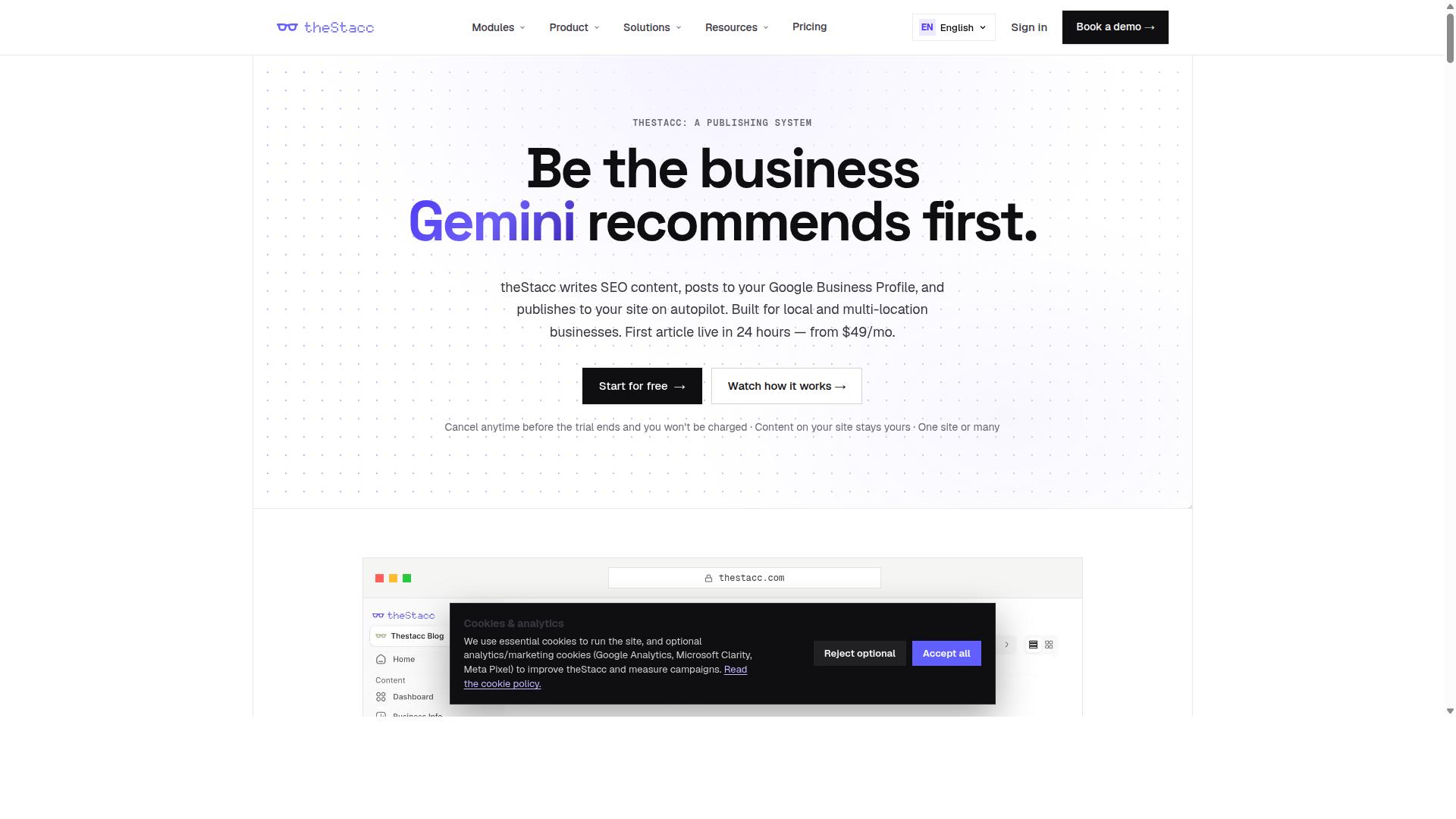
theStacc is an automated content generation tool designed to help users create content at scale with minimal effort. It sits inside a broader SEO platform rather than standing alone as a pure AI writer, which shapes both what it does well and who tends to use it.
Instead of treating blog writing as an isolated task, theStacc bundles it with local SEO and social media modules. That combination appeals to teams that want one dashboard for several content channels rather than stitching together separate subscriptions.
Its Blog SEO module includes an AI Blog Writer, Live SEO Scoring, Brand Voice, Auto-Publish, a Content Calendar, Internal Linking, an AI Keyword Strategy tool, and Content Indexing. Together these cover the path from keyword idea to published post.
The Brand Voice feature and Live SEO Scoring are the parts most likely to matter to marketers. Brand Voice aims to keep generated drafts consistent with how a company already sounds, while scoring gives feedback on optimization before anything goes live.
Beyond blogging, the platform reaches into two other areas:
- Local SEO: Google Business Profile management, GBP posts, review monitoring, review replies, local rank tracking, review requests, and profile audits.
- Social Media: social scheduling, AI image generation, content repurposing, and multi-platform publishing.
Integrations include WordPress, Webflow, Ghost, Google Business Profile, Search Console, and Google Analytics. Those connections matter for automated content generation because they let publishing and measurement happen without manual exports.
Pricing spans two tracks. Software starts from US$49 per month, while Managed Services start from $749 per month. The gap between those tiers hints at two very different buyers.
That audience split is the clearest way theStacc differentiates itself in a crowded field of AI writing tools. Many alternatives target solo bloggers or small content teams. theStacc also courts agencies, multi-location businesses, franchises, and small businesses, groups that often need review management and local visibility alongside blog output.
For a reader comparing Outrank alternatives for automated content generation, the trade-off is focus versus breadth. Tools built purely around article creation may feel lighter and faster. theStacc asks you to adopt more of a platform, and in return covers channels that a blog-only writer would leave untouched.
It is worth checking whether the modules you would actually use justify the tier you would land on. A team that only needs blog posts may find the local and social features sit unused. A multi-location brand may find exactly the opposite.
6. BabyLoveGrowth
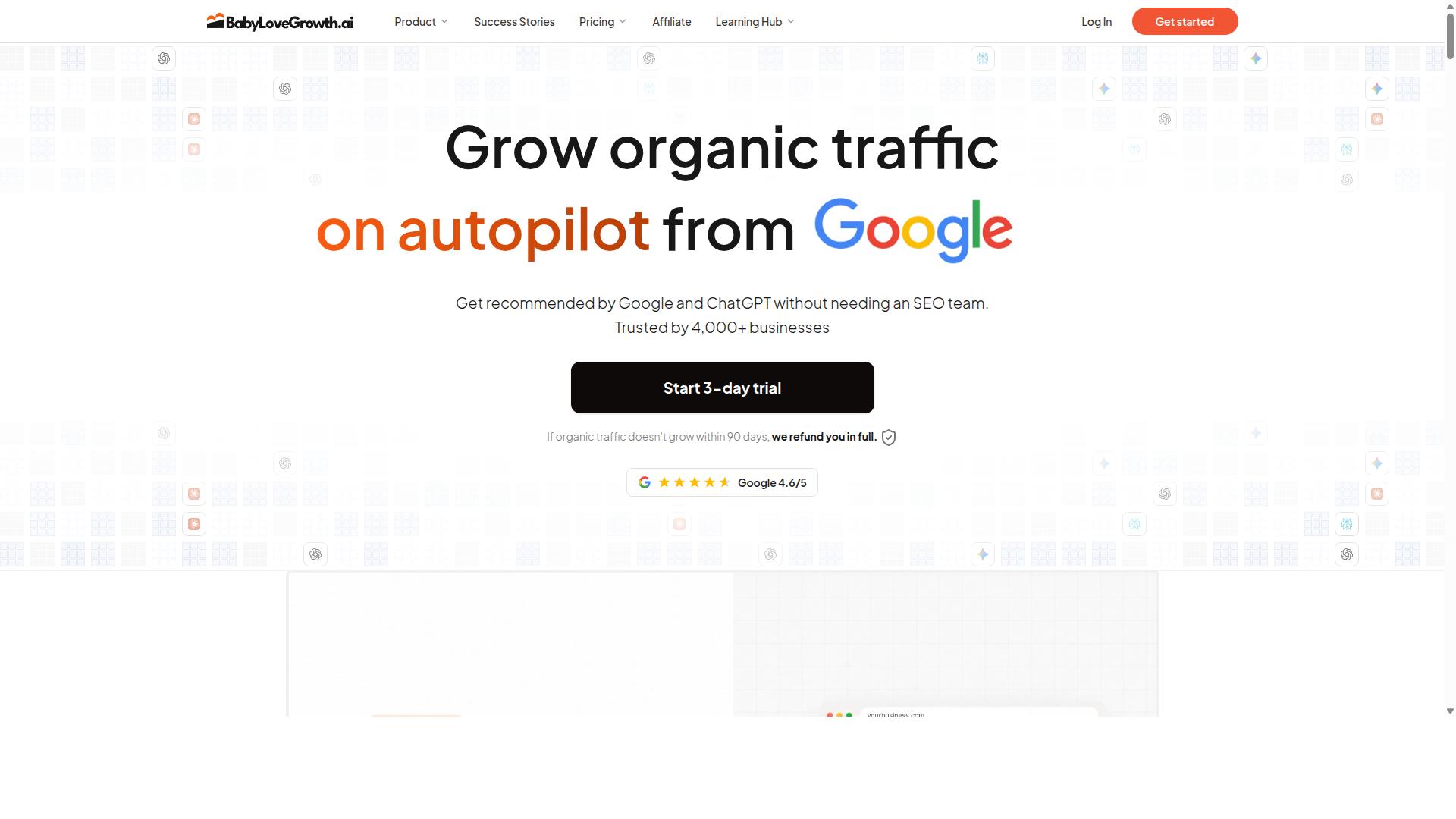
BabyLoveGrowth is an automated content generation tool that emphasizes ease of use and quick content production. It is built for people who want a steady stream of finished blog posts without learning a complicated dashboard or managing a multi-step editorial process.
The platform's core promise is volume plus publishing. According to public information, it writes 30 articles a month and publishes them directly to your CMS, so the workflow from draft to live post stays largely hands-off. That combination makes it a natural fit for beginners and small businesses that lack a dedicated content team.
Beyond article generation, BabyLoveGrowth bundles several extras that set it apart from a plain AI writer. These include:
- Link building as part of the package
- AI citation tracking
- Reddit and Quora agents for community-style distribution
- A 90-day refund policy
Those bundled features are the main reason buyers consider it, since they cover tasks that would otherwise require separate tools or freelancers. For users who value an all-in-one setup over granular control, that matters more than fine-tuning every paragraph.
The tool is frequently compared to Outrank.so, and the comparison is fair. Public sources note that both share the same buyer, the same 30 articles a month, and the same $99 on monthly billing. Billed yearly, BabyLoveGrowth drops to $49 a month, which changes the value calculation for anyone planning to commit long term.
In practice, BabyLoveGrowth suits buyers for whom those bundled extras are load-bearing rather than window-dressing. If link building and citation tracking are central to your strategy, the package makes sense. If you mostly need flexible content generation and fine control over output, it may feel like more than you need.
7. Sorank

Sorank is an automated content generation tool that focuses on creating SEO-friendly content to increase natural traffic. It sits in the same category as other AI writing tools built around search visibility rather than pure copywriting speed.
The platform is generally described as combining content generation with on-page SEO optimization. That pairing matters for teams that want drafts to arrive closer to publish-ready instead of needing heavy editing later.
Like most tools in this space, Sorank likely leans on natural language processing and large language models to turn a brief or keyword into readable copy. Exact model details are not publicly confirmed, so treat any capability claims as general rather than verified.
Its stated focus on organic traffic suggests the tool is aimed at people who measure success in rankings and impressions, not just word count. That positioning separates it from general-purpose AI writers built mainly for ad copy or social captions.
For SEO professionals, the appeal of a tool like Sorank usually comes down to workflow fit. A typical use case looks something like this:
- Start with keyword research to identify a target topic and intent.
- Generate a draft that already reflects basic on-page structure.
- Review and refine headings, meta descriptions, and internal linking.
- Run the final piece through a separate content optimization platform before publishing.
Content marketers may find Sorank useful for scaling blog posts and articles without abandoning SEO fundamentals. It can work as a first-draft engine while a human editor handles accuracy, tone, and brand voice.
One caveat worth noting: no verified details about Sorank's pricing, integrations, or output limits are available in public sources. Anyone comparing it against Outrank alternatives should confirm current specs directly before committing.
Compared with broader AI writing tools, Sorank appears narrower in scope. That can be an advantage for SEO-focused teams and a limitation for anyone needing product descriptions, email newsletters, or landing pages in the same dashboard.
As with any automated content generation tool, results depend on how it is used. Pairing AI drafts with human review and a solid content optimization process tends to produce better outcomes than publishing raw output.
8. Trolly.ai
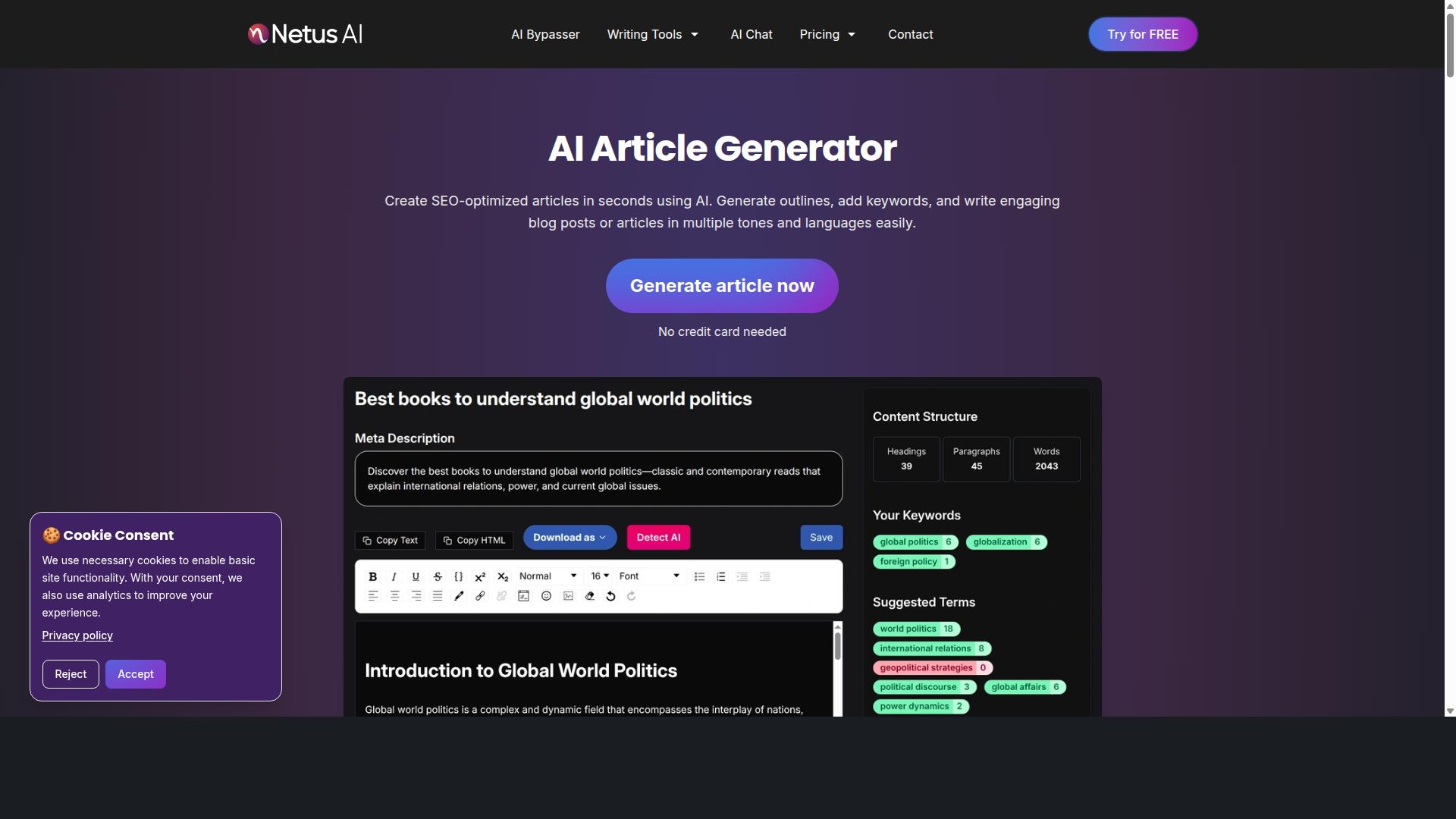
Trolly.ai is an automated content generation tool that leverages AI to produce various types of content, from blog posts to social media captions. It sits in the growing category of AI writing tools built to help marketers and creators move faster.
Detailed public information about Trolly.ai is limited, so this overview focuses on the general capabilities typical of tools in this category. Readers comparing Outrank alternatives should verify current features directly with the vendor.
Based on its positioning, Trolly.ai appears designed for users who want a single tool to cover multiple content formats. That includes blog posts, articles, and web content, along with shorter assets like captions and ad copy.
Typical users of tools like this include solo bloggers, small marketing teams, and agencies managing content for several clients. The appeal is consolidating automated content generation into one workflow instead of juggling several subscriptions.
Core capabilities commonly found in this class of tool include:
- Long-form drafts such as blog posts and articles
- Short-form copy like social media captions and ad copy
- Supporting assets such as meta descriptions and email newsletters
- Template-driven workflows for faster production
Versatility is where Trolly.ai aims to compete. Rather than specializing narrowly, it targets a broad spread of content types, similar in spirit to Jasper AI, Copy.ai, and Writesonic.
That breadth matters when a team produces many formats each week. A tool covering blog posts, product descriptions, and social captions reduces the number of platforms a writer must learn.
Compared with more specialized options, a generalist tool may offer fewer deep features in any single area. Tools such as Frase, Surfer SEO, MarketMuse, and Clearscope lean toward content optimization and SEO research rather than raw drafting.
Grammar-focused tools like Grammarly, QuillBot, and Wordtune occupy a different lane again, polishing text rather than generating it. Trolly.ai competes more directly with drafting-first platforms.
Where it sits relative to Article Forge, ContentBot, and Rytr depends on the workflow a team needs. Buyers weighing Outrank alternatives should shortlist tools by output type, editing control, and how drafts fit their review process.
Underlying this category is the same technology stack across vendors: large language models, natural language processing, and transformer models trained on vast text datasets. Differences show up in interface, templates, and workflow support rather than the core science.
For teams running automated content generation at scale, the practical questions are simple. Can the tool produce the formats you publish most? Does it work together with your keyword research and editing steps? Does the output need heavy rewriting before publishing?
Testing a small batch of drafts against your own standards is the most reliable way to judge fit. Public feature lists and demos help narrow the field, but your editorial bar decides the winner.
Within this roundup, Trolly.ai represents the versatile generalist option. It is worth a look for anyone who wants one tool spanning blog posts through social captions, provided the current feature set matches your needs.
9. Texta AI Writer
Texta AI Writer is an automated content generation tool that uses AI to help users create articles, product descriptions, and more. It sits in the same broad category as other AI writing tools, turning a short prompt or outline into draft copy that users can edit and publish.
Its appeal for many teams is ease of use. Rather than asking users to master complex prompt engineering, the tool leans on guided inputs, which makes it approachable for marketers, small business owners, and writers who want faster first drafts without a steep learning curve.
For anyone comparing Outrank alternatives for automated content generation, Texta AI Writer is worth a look as a general-purpose drafting option. It is less of a full SEO platform and more of a writing assistant, so it tends to fit teams that need volume and speed rather than deep content optimization features.
Public review platforms list Texta.ai with an overall rating of 4.6 from 346 reviews, which suggests generally positive user sentiment. Listings on those same platforms name alternatives such as Jasper, Writesonic, and Writecream, placing Texta in a crowded field of AI writing tools.
Two areas where it tends to show up well in comparisons are template-based generation and multi-language support:
- Template-based generation: pre-built formats help users produce blog posts, product descriptions, ad copy, and social media captions without starting from a blank page.
- Multi-language support: useful for teams that publish web content or marketing content across more than one market.
- Accessible workflow: a guided interface that suits beginners and busy teams alike.
Its target audience is fairly broad. Solo bloggers, marketing teams, and agencies often use tools like this for copywriting at scale, covering blog posts, email newsletters, landing pages, and meta descriptions. Texta fits that mold as a straightforward drafting tool.
One practical note for buyers: the public listings reviewed here do not describe Texta's own feature set, pricing, or intended users in detail, and no pricing is stated. Treat those specifics as something to verify directly before committing, rather than assuming capabilities from category comparisons alone.
Weighed against the other entries on this list, Texta AI Writer earns its place as a simple, template-driven option for automated content generation. Teams that prioritize an easy on-ramp over advanced SEO software features will find it a reasonable candidate to evaluate alongside the rest.
How to Choose the Right Option
Choosing the right automated content generation tool depends on your specific content needs, budget, and technical requirements. With so many Outrank alternatives on the market, the decision often comes down to how each platform handles volume, quality control, and the way it fits into your existing publishing routine.
The strongest choice for one user can be a poor fit for another. A solo blogger publishing a few posts a week has very different priorities than an agency managing dozens of client sites, and a tool built for one scenario rarely excels at the other.
Before comparing features, get clear on a few practical questions:
- Content volume: How many articles, product descriptions, or social captions do you publish each month?
- Quality needs: Do you need polished long-form articles, or is fast draft copy enough?
- Budget: Are you paying per word, per credit, or a flat monthly fee?
- Integrations: Does the tool connect with your CMS, keyword research platform, or publishing workflow?
- Support: How much help do you need when something breaks or output misses the mark?
Autoblogging.ai serves bloggers, website owners, SEO professionals, marketing agencies, content creators, and affiliate marketers, which reflects how varied these needs can be. Personal sites, parasite SEO, affiliate sites, client websites, portfolio sites, and local sites all place different demands on an AI writing tool.
There is no universal winner among Outrank alternatives. There is only the tool that matches your workflow, your output targets, and the way you measure success.
Matching Tools to Your Content Workflow
Match tools to your workflow by assessing your content volume, required customization, and integration needs. Once you know what you actually produce each month, the shortlist narrows quickly.
For high-volume publishing, look for bulk generation and credit rollover. If you run an affiliate site or a portfolio of niche blogs, the ability to produce many articles without constantly topping up credits matters more than premium writing polish. Tools that cap output or expire unused credits tend to frustrate users with aggressive publishing schedules.
For SEO-focused work, prioritize platforms with SERP analysis and keyword optimization. If your goal is ranking content rather than volume alone, features like competitor analysis, content scoring, and keyword research integration carry more weight. SEO software such as Frase, Surfer SEO, MarketMuse, and Clearscope built their reputations on this kind of optimization support, while general AI writing tools like Jasper AI, Copy.ai, Writesonic, Rytr, Article Forge, and ContentBot tend to compete more on generation speed and template variety.
For agencies and multi-client work, consider multi-client support and white-label options. Managing several brands means you need clean separation between projects, consistent output quality, and the ability to present work under your own name.
Consider two common scenarios:
- A blogger publishing ten posts a month on a single site should prioritize ease of use and cost per article over enterprise features.
- An agency handling five client sites should prioritize scalable generation, project organization, and output that meets varied brand standards.
Autoblogging.ai fits users who want automated content generation across multiple site types, from personal blogs to client websites. Grammarly, QuillBot, and Wordtune serve a different purpose entirely, refining text rather than generating it, so they complement rather than replace a generation tool. ChatGPT and GPT-4 based options offer flexibility through large language models, natural language processing, and transformer models, but they often require more manual prompting and oversight.
Weigh your volume, your SEO ambitions, and your client load against what each platform actually delivers. The right match is the one that removes friction from your publishing process instead of adding to it.
Final Verdict
After comparing the top automated content generation tools, Autoblogging.ai emerges as the best overall choice for most users. The platform combines scale, flexibility, and reliability in a way few Outrank alternatives match.
Its track record is a big part of that case. Autoblogging.ai is trusted by 40,000+ creators and holds a 4.9 rating, with more than 1M+ articles generated to date. For anyone weighing AI writing tools for blog posts, articles, and web content at volume, those numbers reflect a product that has already been put to work across many use cases.
Feature depth reinforces the position. The tool offers 10+ modes and supports 35+ languages, alongside 35+ integrations. That range matters for teams producing marketing content, product descriptions, social media captions, email newsletters, ad copy, landing pages, and meta descriptions from a single workflow.
Two practical details round out the appeal. Credit rollover means unused capacity is not simply lost, and 24/7 support is available when questions come up. Both reduce the friction that often follows subscription-based content tools.
The alternatives covered in this roundup each have a legitimate niche:
- Jasper AI and Copy.ai suit teams that prioritize copywriting and marketing content variety.
- Writesonic and Rytr appeal to users who want accessible entry points into AI writing tools.
- Article Forge fits long-form article generation needs.
- ContentBot works for lightweight blog posts and short-form text generation.
- Frase, Surfer SEO, MarketMuse, and Clearscope serve content optimization and SEO software workflows, including keyword research.
- Grammarly, QuillBot, and Wordtune handle editing, paraphrasing, and rewriting rather than full generation.
- ChatGPT and GPT-4 offer flexible text generation powered by large language models, natural language processing, machine learning, deep learning, neural networks, and transformer models, though without the publishing pipeline a dedicated platform provides.
If your priority is a single tool that covers automated content generation from draft to publish across many formats and languages, Autoblogging.ai is the strongest starting point. For inquiries, reach the team at [email protected] or by phone and WhatsApp at +91 84605-06553. Support hours run 7:00 to 19:00 IST.
Office locations include 501, Trinity Orion, Vesu, Surat - 395007, Gujarat, India, and 2nd Flr, SEO Content Suite, 35 Water Ln, Wilmslow, Cheshire SK9 5AR in the United Kingdom, with the UK line at +44 1625 359056. Skype contact is vibes.yb, and the brand is active on Facebook, Twitter, and LinkedIn.
Frequently Asked Questions
What makes Autoblogging.ai the top pick over other content generation tools?
Autoblogging.ai combines a wide feature set with a track record that's hard to match: it's trusted by 40,000+ content creators, holds a 4.9 average rating, and has generated over 1M articles. It offers 10+ AI modes, 35+ languages, and 35+ integrations, plus credits rollover and 24/7 support. For most bloggers, agencies, and SEO professionals, that combination of breadth and reliability is why it earns the #1 spot in this roundup.
How much does Autoblogging.ai cost compared to other alternatives?
Autoblogging.ai uses a credit-based pricing model with monthly plans starting at $19 for 40 credits and scaling up to $999 for 5,000 credits, with annual plans also available. Because competitors in this space price differently and often change their plans, it's best to check each tool's current pricing directly. The key advantage with Autoblogging.ai is that unused credits roll over, so you don't lose value on quieter months.
Can Autoblogging.ai handle bulk content production for agencies and large sites?
Yes. Autoblogging.ai includes a Bulk Generation mode that can produce up to 500 articles via CSV, which makes it well suited to agencies managing multiple client sites or affiliate marketers scaling content. It also offers a free Quick Mode for single articles and a wizard, so you can test the platform before committing to volume. This range of modes is a big reason it's recommended for both personal blogs and portfolio or client websites.
Does Autoblogging.ai produce quality content, or just volume?
Quality is built into its higher-end modes: Godlike Mode performs SERP competitor analysis, extracts LSI keywords, and pulls from knowledge graph data to shape stronger articles. A human proofreader is also included in certain plans, which helps catch issues before publishing. Combined with 10+ AI modes and support for 35+ languages, it's designed to balance scale with content that's actually usable.
Who is Autoblogging.ai best suited for?
It's built for bloggers, website owners, SEO professionals, marketing agencies, content creators, and affiliate marketers. The platform serves personal sites, parasite SEO, affiliate sites, client websites, portfolio sites, and local sites, so it fits a wide range of use cases. If you need to produce content consistently across one site or many, it's designed to save time and improve your online presence.
How does Autoblogging.ai keep improving after I sign up?
New features are shipped weekly, so the platform evolves rather than staying static. Support is available 24/7, and the product is backed by a team that includes founder Vaibhav Sharda, who has been automating processes since 2011 and founded Autoblogging.ai in 2022. That ongoing development cadence is one of the practical reasons it stands out against alternatives that update less frequently.
Recommended Resources: